How Much Does a Virtual Reality or AR Experience Really Cost in Real Estate?

How Much Does a Virtual Reality or AR Experience Really Cost in Real Estate?

Over the last several years, immersive technology has reshaped how real estate projects are communicated, evaluated, and ultimately sold. Virtual reality, augmented reality, and high-fidelity 3D environments are no longer novelties. They have become central tools in the way architects present design intent, the way developers secure capital, the way sales teams engage early buyers, and the way planners evaluate proposals. Yet for all their growing utility, one question continually resurfaces across the industry: What does a virtual tour or AR experience actually cost?

Immersive technology has evolved far beyond traditional architectural visualization, expanding into interactive, real-time environments that help stakeholders understand projects long before construction begins.

It’s a fair question, but there is no single, universal number. The investment depends heavily on the type of asset, the scale of the project, the level of realism required, and the purpose of the experience. A VR walkthrough used to help a family visualize a custom home sits in an entirely different category from an interactive, navigable digital twin of a multi-acre master-planned community. What matters more than the number itself is understanding what drives the costs, and why the investment has become a strategic advantage for so many firms.

As the industry has matured, pricing has stabilized into clear, predictable ranges. Studios across the visualization space, from boutique specialists to enterprise-level providers, tend to cluster around similar benchmarks for similar categories of work. These figures reflect both the complexity of the deliverable and the long-term value the experience produces.
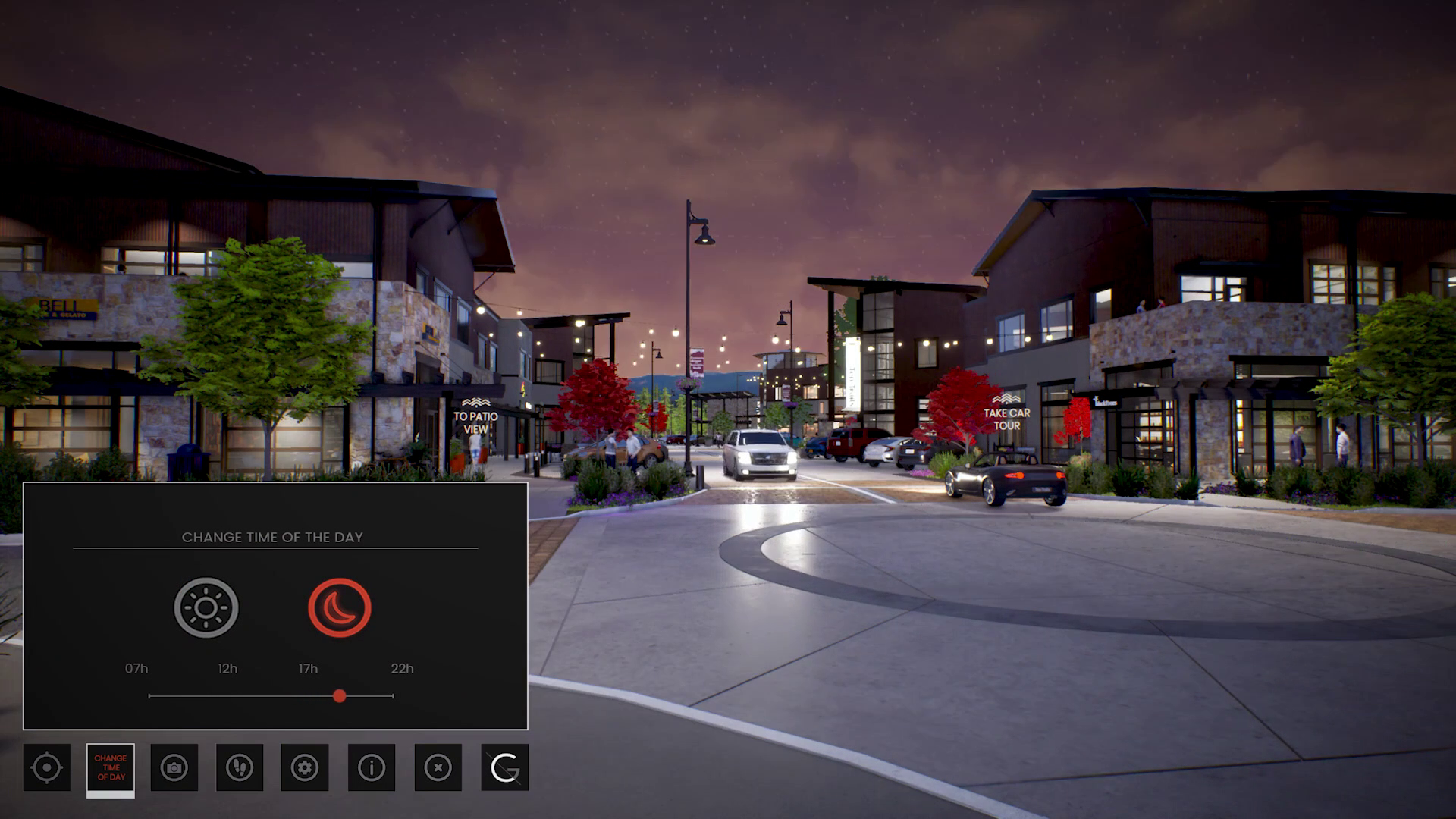
Unreal Engine real-time visualization showing day-to-night lighting transition for mixed-use development presentation

Single-Family Custom Homes (Typical Range: $20,000–$50,000)

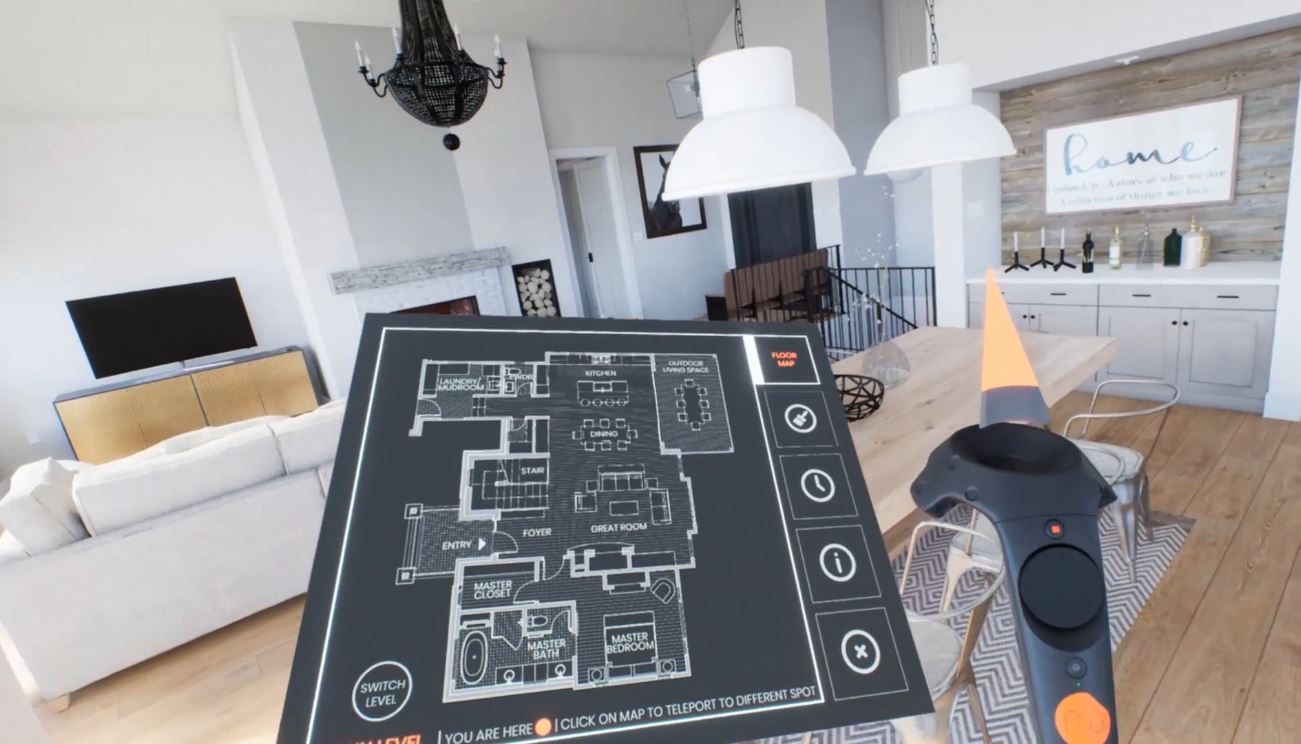
Custom homes represent one of the fastest-growing uses of immersive visualization. Homeowners want clarity. Builders want fewer change orders. Architects want alignment before construction begins. That combination has made virtual walkthroughs a central piece of the preconstruction experience. for many builders, these experiences have become more effective than conventional real estate renderings because clients can explore a space in a fully interactive, 3D virtual tour rather than interpreting static images.

Producing an accurate single-family home environment involves modeling every room, material, finish, millwork detail, and lighting condition with enough fidelity that the space feels believable, and more importantly, decisive. Buyers increasingly expect to move through their future home as though it already existed, evaluating circulation, scale, and daylight in real time. Many also want the ability to preview finish packages, alternate flooring, or compare cabinetry colors, which adds an additional layer of interactive logic to the model.

Because of these requirements, high-quality single-family VR and AR experiences typically land in the $15,000 to $50,000+ range across the market. The bottom of that range generally reflects simpler homes with fewer interactive elements, while the upper end accounts for homes with multiple finish schemes, customized interiors, or VR headset optimization. For many builders, the investment quickly pays for itself. Decisions happen earlier. Confusion disappears. Revisions drop. And buyers move forward with greater confidence, often accelerating the sales timeline.
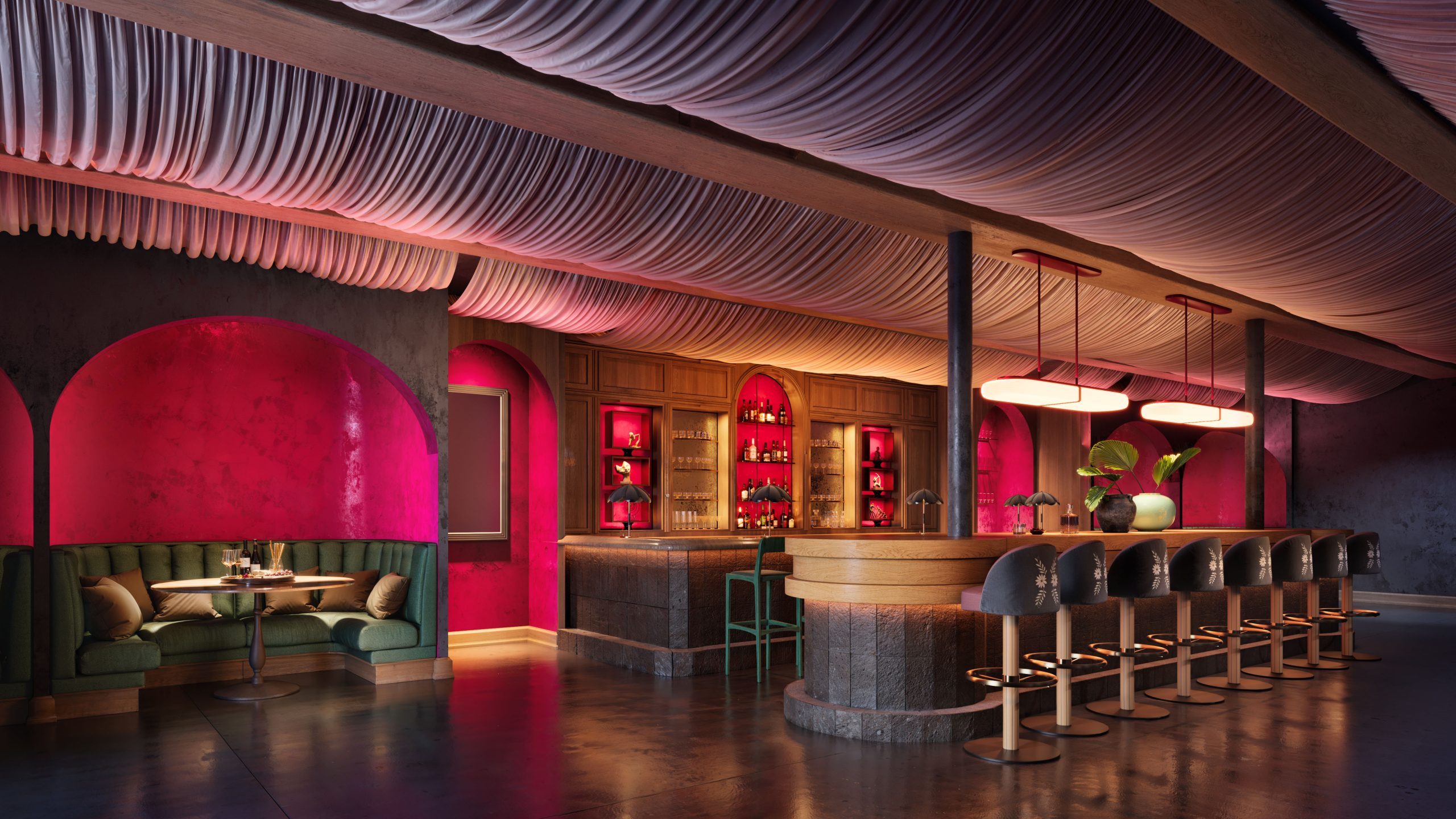
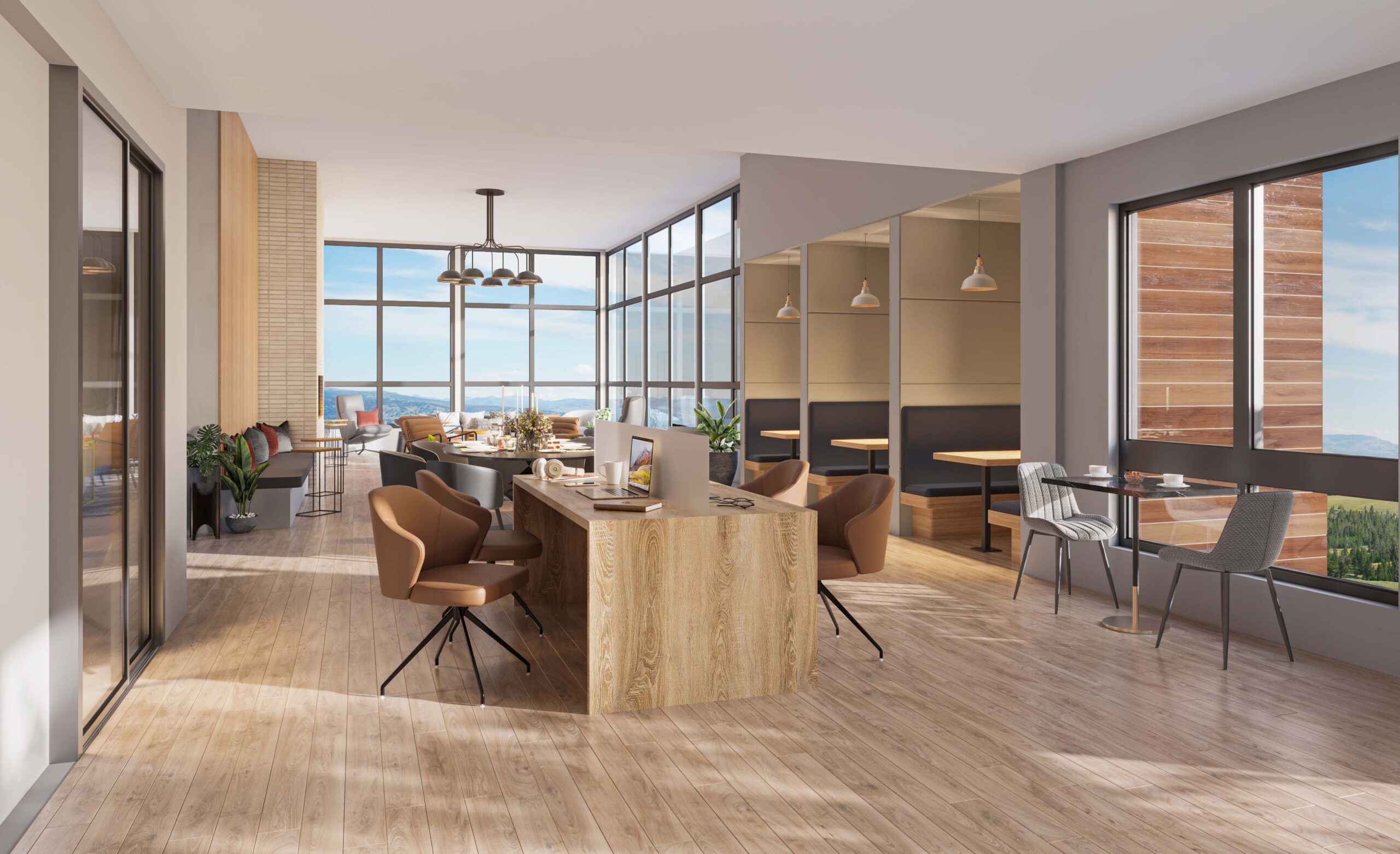
co-working space rendering for Carmel Partner Denizen project

Condominium Pre-Sales and Multi-Unit Buildings (Typical Range: $30,000–$100,000+)

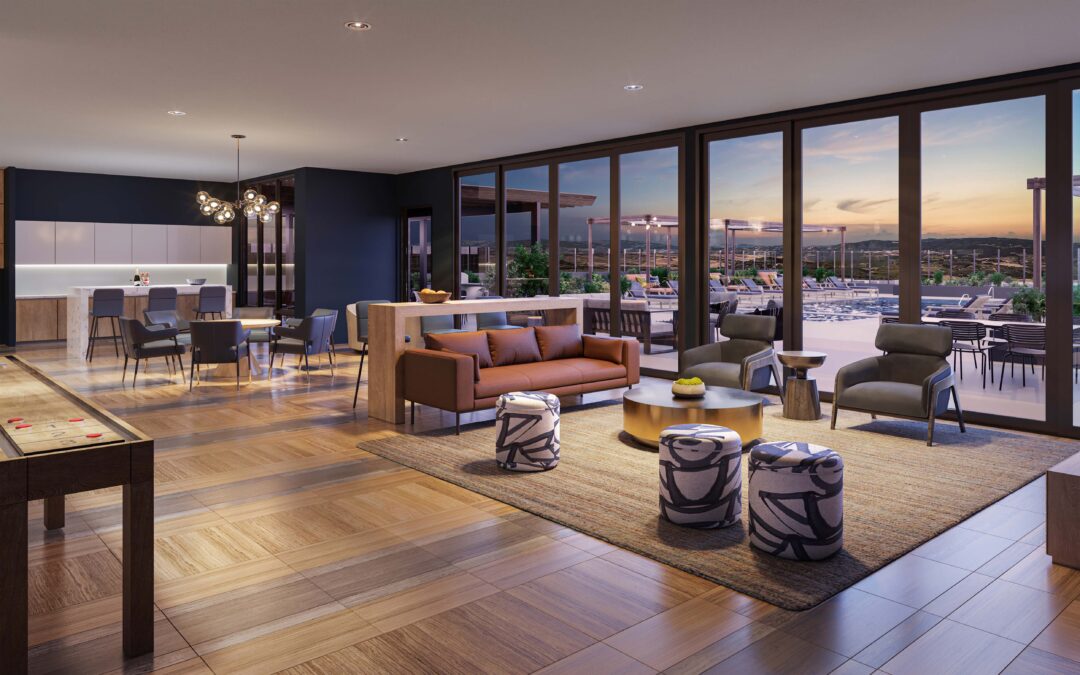
Condo development introduces a different set of demands. Instead of one interior, there may be dozens of floorplans. Instead of a single environment, there are amenity levels, circulation spaces, lobbies, and shared program areas. Pre-sales hinge on a prospect’s ability to understand the entire vertical experience, not just the unit they are purchasing.

To address that, developers rely on interactive tours capable of guiding a buyer through amenity floors, presenting different unit lines, showcasing views at various elevations, and helping them compare layouts without needing to visit multiple staged models. These digital tours also serve as the centerpiece of modern sales galleries, where touchscreen stations, large displays, or VR headsets immerse buyers in the finished building long before move-in.

This shift toward interactive 3D visualization walkthroughs has redefined how multi-unit developments are marketed and has largely replaced older methods of architectural visualization that relied on still images and brochures.

Across the industry, projects of this type typically fall between $30,000 and $100,000+, depending on the number of units, the complexity of amenities, and the degree of interactivity. For larger high-rise buildings or luxury developments with a heavy emphasis on lifestyle branding, the pricing often extends upward due to the level of craft, detail, and consistency required.

The value to developers is substantial: faster absorption, reduced physical staging costs, and clearer early communication with buyers. In competitive markets, a strong virtual experience has become as important as a well-produced render set, sometimes more.
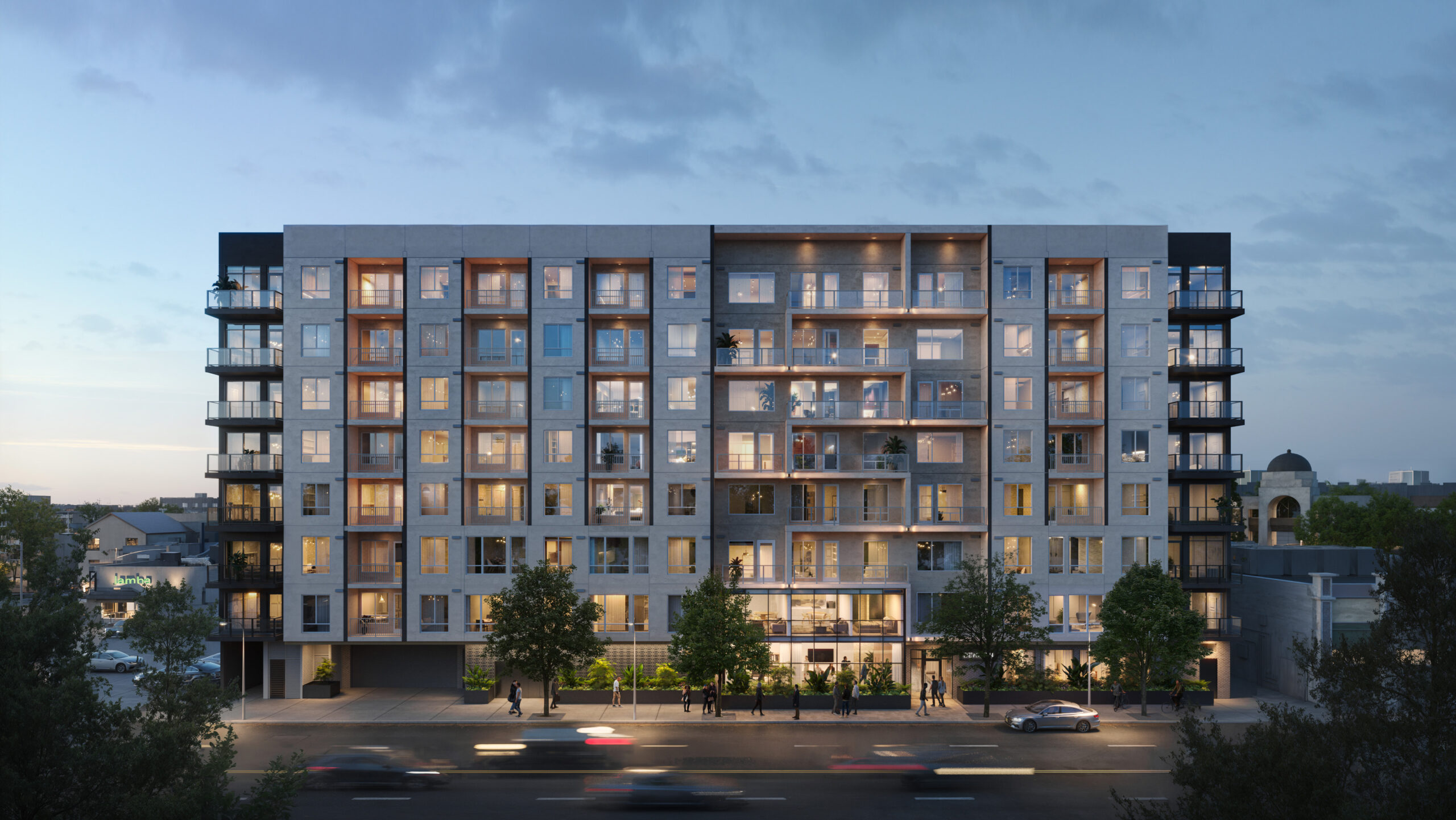
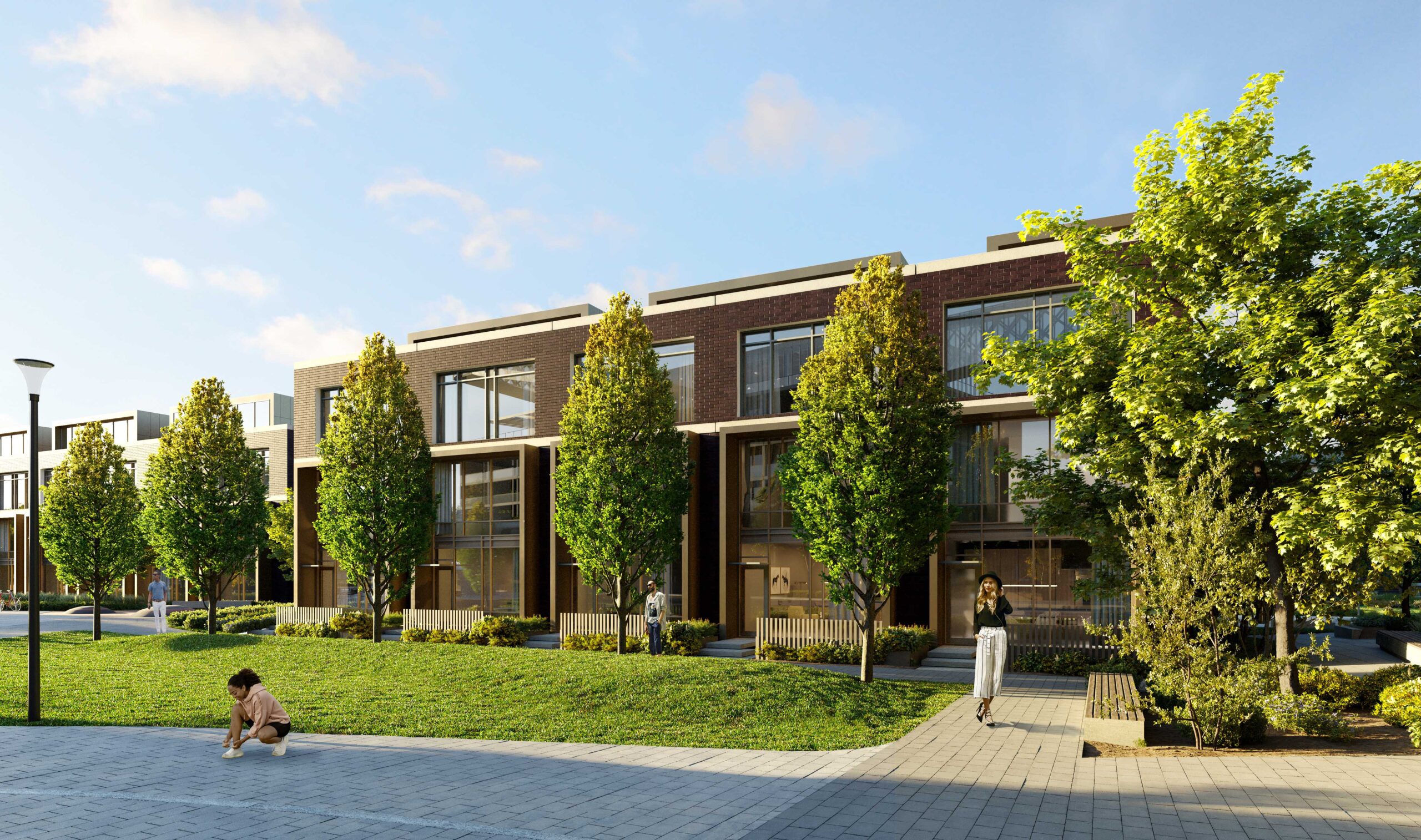
Exterior 3D rendering for Carmel Partner Denizen San Diego project

Master-Planned Communities and Digital Twins (Typical Range: $50,000–$150,000+)

At the upper end of the spectrum sit large mixed-use districts, multi-acre neighborhoods, corporate campuses, and entire community master plans. These require an approach that blends architectural visualization with environmental simulation. The experience is no longer restricted to a single structure; it must convey a full ecosystem, streets, plazas, green space, building massing, and sometimes even mobility elements such as pedestrian flow or vehicular traffic. Many studios now rely on Unreal Engine to develop these environments, since it supports real-time rendering, vast outdoor terrains, and the level of fidelity these projects demand.

These digital twins are used for far more than marketing. They become tools for design review, where architects and planners evaluate sightlines, spatial relationships, pedestrian experience, and urban form at scale. They support entitlement processes by giving city councils and public stakeholders a way to understand how the proposal will function and feel. They also serve as persuasive assets during capital raises, offering investors a comprehensive understanding of the development’s vision.

The workload required to produce these environments is considerable, involving extensive modeling, texturing, environmental lighting, and interactive logic. As a result, industry-wide pricing for master-planned visualizations typically ranges from $50,000 to $150,000+, with the higher end reflecting projects that span many acres or require particularly high levels of fidelity.

Despite the investment, these environments often become long-term strategic assets, used across multiple phases of design, communication, and marketing, which makes the cost highly defensible relative to the value delivered.

Augmented Reality Applications (Typical Range: $10,000–$100,000+)

AR tools vary widely depending on what the developer or architect needs the experience to accomplish. Some are built to help a buyer stand on an empty lot and visualize the home at full scale. Others support sales teams by displaying interiors in real space or allowing prospects to toggle materials and furnishings. More sophisticated tools allow users to place entire buildings on-site or navigate future streetscapes during community outreach events.

Because AR projects combine 3D modeling with custom software development, the pricing shifts based on platform (iOS, Android, web), level of interactivity, hardware, tracking requirements, and whether the application needs to integrate with sales-center systems. Most firms producing advanced AR solutions price these tools anywhere from $10,000 to $100,000+.
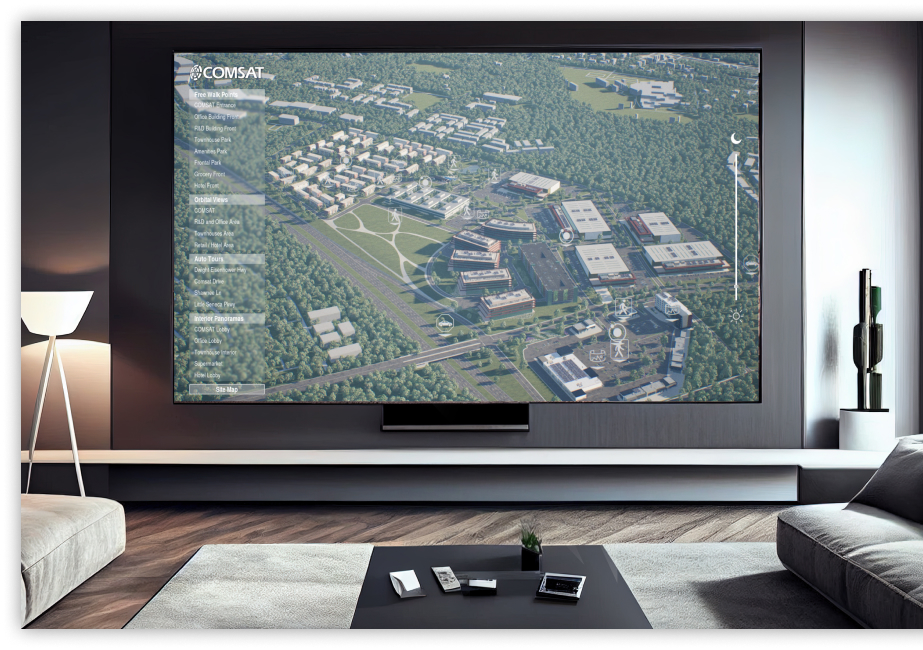
Real-time 3D architectural visualization created in Unreal Engine showcasing interactive masterplan experience

What Actually Drives Cost?

Although each category has its own benchmark, a few consistent factors shape every estimate in the industry.

Scale is always the largest driver. A project that requires dozens of unique interiors will naturally demand more time than a single-home environment. Complexity follows closely behind; high realism requires greater attention to materials, lighting, and spatial nuance. Interactivity has a meaningful impact as well, since every option a user can toggle demands its own logic and testing. Platform also matters, as VR headsets, web browsers, and mobile AR each impose their own optimization requirements.

Timeline can influence cost, especially when projects require rapid delivery for pre-sales deadlines, investor meetings, or entitlement cycles. And finally, the number of deliverables, such as still renderings, animations, and alternate lighting passes, can shift the overall scope.

These factors don’t just affect price; they also affect the project’s long-term usefulness. The more comprehensive the model, the more ways it can be deployed across design, marketing, capital raising, and public engagement.

How Long Does Production Take?

Timelines fluctuate with scope. Single homes are generally completed in a matter of weeks. Condo buildings typically require a 4-12 weeks. Master-planned digital twins often stretch across multiple seasons due to iterative design cycles and the sheer volume of elements involved. AR applications fall somewhere in the middle, depending heavily on software requirements.

What matters most is aligning the timeline with project milestones. Visualization is most powerful when integrated early, not added as an afterthought.
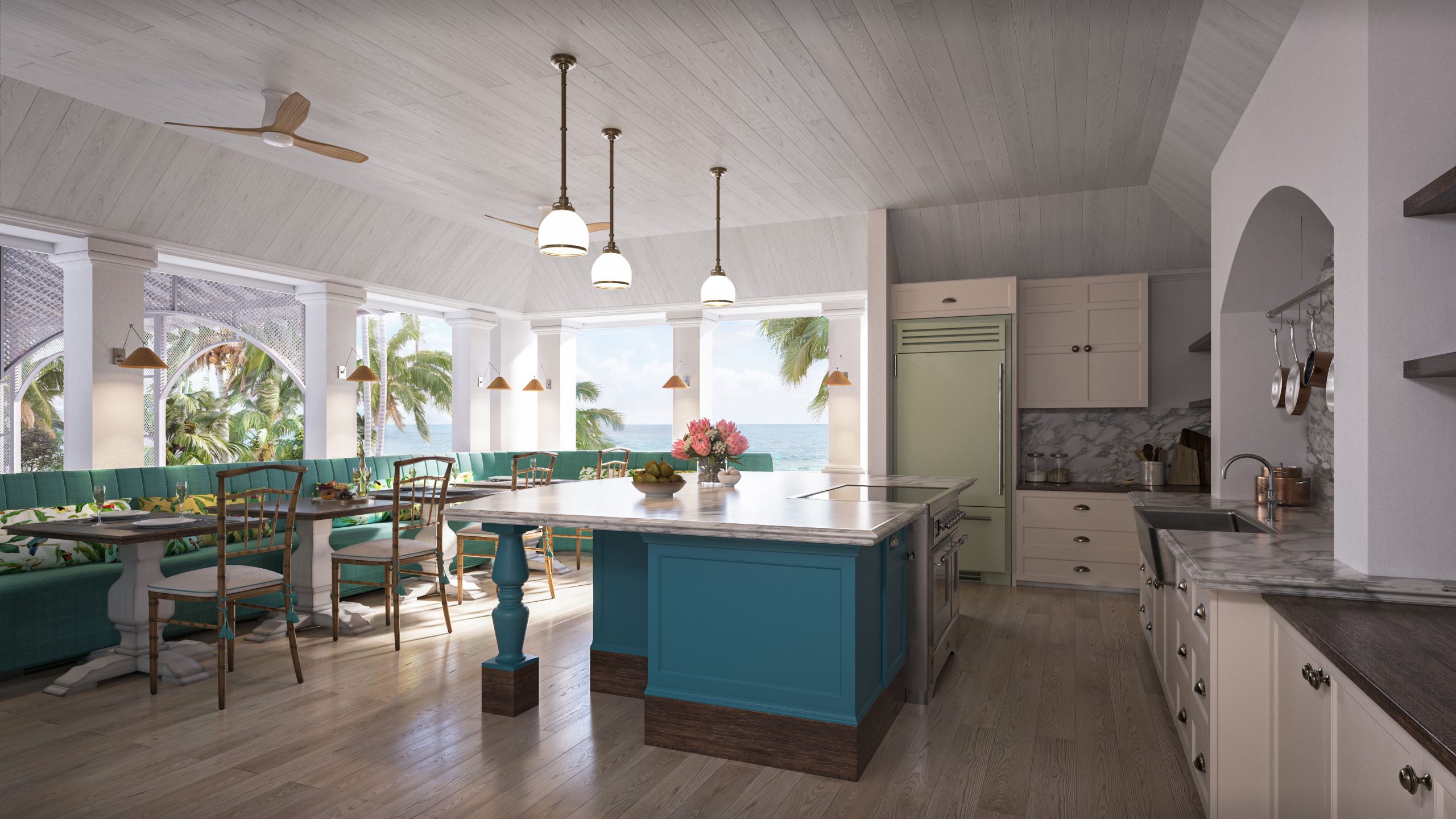
3D architectural rendering of a private dining room with modern pendant lighting, large windows, and elegant seating design.

Why Developers and Architects Continue to Invest

The logic behind the growth of immersive visualization is simple: it reduces uncertainty. When buyers, city officials, designers, and investors can experience a project long before it’s built, the entire development process becomes clearer and more collaborative.

Custom home clients make decisions earlier. Condo buyers commit with confidence. Planning teams catch issues before they become expensive problems. Investors understand the opportunity without wading through dense documents. Public stakeholders feel included rather than intimidated. And developers move through each phase of the project with fewer surprises.

These benefits compound. They shorten sales cycles, reduce risk, and compress the time between vision and execution. It’s no coincidence that immersive technology has become standard across forward-thinking real estate groups.

Final Perspective

There is no universal price for a virtual tour or AR experience, because no two projects demand the same level of detail or serve the same purpose. But industry benchmarks offer clarity. Most custom home walkthroughs fall between $20,000 and $50,000. Condo projects typically range from $30,000 to $100,000 or more. Master-planned digital twins begin around $50,000 and climb based on scale. And AR applications span a wide band depending on functionality.

What matters is not simply the number, but the value these tools bring across the development cycle. Immersive visualization is no longer a luxury reserved for headline projects. It is a strategic advantage, one that accelerates sales, strengthens design intent, improves communication, and elevates every stakeholder’s understanding of the built environment.

As real-time engines such as Unreal Engine continue to evolve, the gap between digital and built environments will only get smaller. If you’re exploring VR or AR for an upcoming project, the right partner can help determine the level of detail, the appropriate platform, and the investment that aligns with both your goals and your timeline. In a landscape where clarity drives momentum, immersive visualization has become one of real estate’s most reliable catalysts for progress.

Contact us today to see a live demo or to discuss how we can help bring your next development to life. The future of architectural visualization is here, and it is designed to move your projects forward.
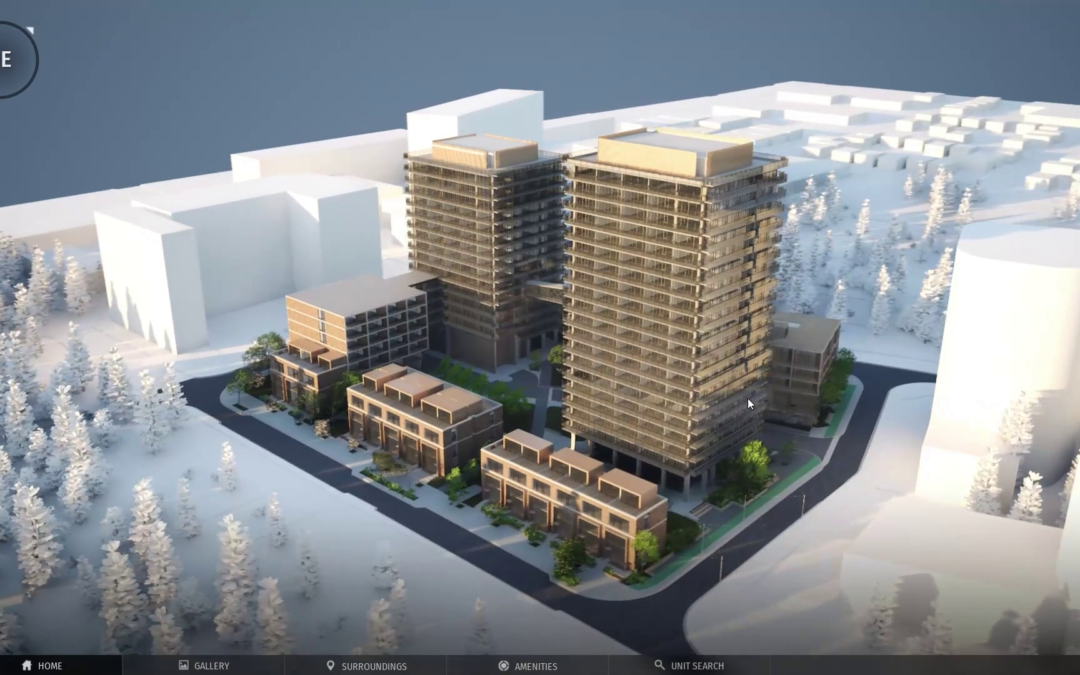
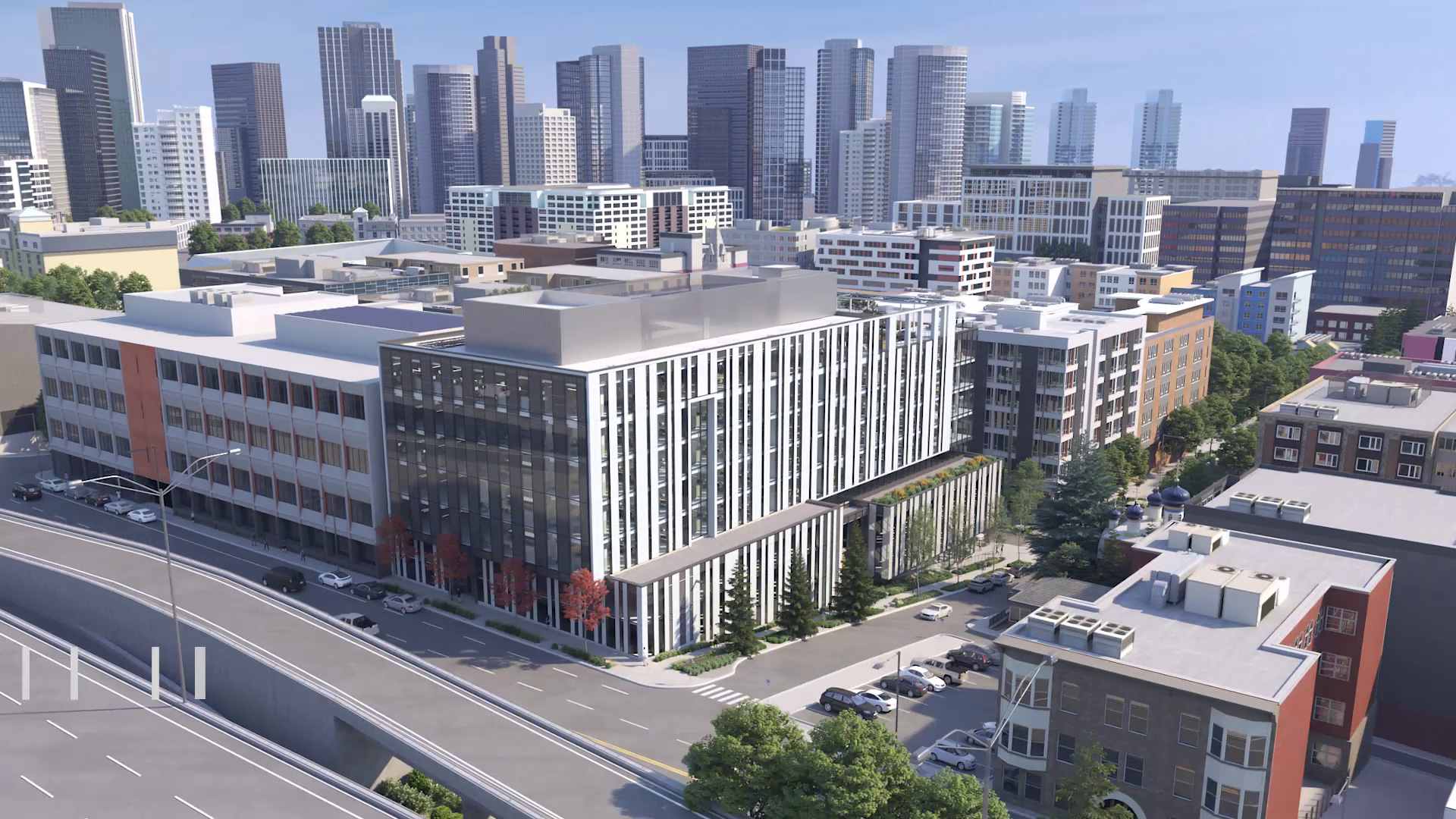
Real-Time Visualization with Unreal Engine and Pixel Streaming

Real-Time Visualization with Unreal Engine and Pixel Streaming

In today’s real estate market, standing out means going far beyond glossy brochures and static renderings. What drives projects forward now is the ability to deliver a real-time experience that is immersive, interactive, and accessible from anywhere. At our architectural visualization studio, we bring that vision to life using Unreal Engine combined with the power of pixel streaming in AWS, allowing clients to step inside their future projects without the need for specialized hardware or in-person meetings.

Single Family Home Rendering

What Sets Modern Visualization Studios Apart

For years, developers relied on static images or scheduled in-person presentations to review new projects. Those days are fading fast. Our architectural visualization studio uses Unreal Engine to create interactive environments that feel authentic and alive. When combined with cloud-based pixel streaming, this workflow puts the entire project within reach of your laptop, tablet, or even your phone, no expensive hardware or complex installations required.

The traditional limits are gone. Whether your team is local or spread across continents, everyone can experience and interact with the project in real time. This is not just a technical upgrade; it’s a new way to collaborate, make decisions, and move confidently from concept to closing.

co-working space rendering for Carmel Partner Denizen project

How Pixel Streaming and Unreal Engine Work Together

The secret sauce is in how we connect the dots between high-fidelity 3D design and practical, everyday access. Unreal Engine provides the horsepower, delivering photorealistic renderings, smooth navigation, and interactive features like finish changes, furniture swaps, and lighting adjustments.

Pixel streaming, powered by AWS, shifts all the heavy processing off your device and into the cloud. Your project is hosted on secure, scalable AWS servers. When you access it, you’re actually streaming live visuals rendered by Unreal Engine, just like joining a Zoom call or watching a high-quality video, but with the ability to control and explore the 3D environment as if you were walking the site yourself.

There are no downloads, no need for a graphics workstation, and no more lag time between design meetings and actionable feedback. This is a real-time experience that fits seamlessly into your existing workflow.

exterior 3d visualization service in Barbuda (Caribbean islands)

Why This Matters NowReal-World Benefits for Developers

For real estate developers, this approach truly changes the game at every stage of a project. In the pre-development and pitching phase, you can present fully interactive models to partners, investors, or municipal boards. Rather than relying on static images, you are able to walk everyone through site plans, zoom into specific details, and answer questions on the fly. Remote stakeholders can join these sessions from anywhere in the world, participating as if they are right in the room with you.

When it comes to design collaboration, working with architects, engineers, and designers becomes seamless. Everyone gathers in the same virtual environment, where different materials or layouts can be tested instantly. Input is gathered in real time, and changes are made on the spot, giving every team member immediate insight into the evolving design.

For sales and marketing, the benefits are just as significant. Potential buyers or tenants can be offered guided tours of spaces that have not even been built yet. Clients have the chance to customize finishes or explore various unit options with ease. Pixel streaming eliminates barriers, enabling sales teams to present projects whether they are on-site, in the office, or even at international events, all without the need for special equipment.

Perhaps most important of all, this technology builds client confidence. Misunderstandings are reduced and surprises are minimized, which means approvals come more quickly. When clients experience their future building as a living, interactive environment, decisions become faster, clearer, and far more informed.

An Example from the Field

Recently, we worked with a global developer preparing to launch a new mixed-use community. The client team was scattered between New York, London, and Dubai. Using our pixel streaming solution hosted in AWS, everyone joined live, real-time sessions and walked through the master plan, viewing different apartment layouts, trying out amenities, and even exploring landscaping concepts. The design process moved quickly, and feedback was captured instantly. No flights or hardware shipments were necessary, just a secure browser link and an internet connection.

Why This Matters Now

The expectations of buyers and investors are higher than ever. Developers who can offer a cutting-edge, real-time experience have a clear competitive advantage. Our studio is set up to deliver this seamlessly, combining industry expertise with technical know-how. We handle the cloud hosting, manage the streaming, and support your team every step of the way. You get the benefit of world-class visualization without the hassle or extra costs.

Ready for the Next Step?

 If you are a developer looking to transform your approach to presentations, design reviews, or sales, our architectural visualization studio can get you up and running fast. With Unreal Engine and pixel streaming in AWS, you no longer need dedicated hardware or in-person meetings to get everyone on board. Instead, you can offer a real-time experience of your project—accessible anywhere, anytime, and on almost any device.

Contact us today to see a live demo or to discuss how we can help bring your next development to life. The future of architectural visualization is here, and it is designed to move your projects forward.

Architectural rendering of an interior office space featuring a modern, open layout. The design includes sleek furniture, ample natural light from large windows, and contemporary décor elements. The space is arranged to promote collaboration and productivity, with ergonomic desks and comfortable seating.
Inside the Modern Visualization Studio: Unreal Engine’s Impact

Inside the Modern Visualization Studio: Unreal Engine’s Impact

Why 3D Rendering Beats Traditional Blueprints for Homebuyers


Walking into the heart of a contemporary architectural visualization studio feels a bit like stepping into an atelier of the future. Here, creativity and technology intermingle in ways that would have seemed science fiction a decade ago. Gone are the days when stacks of blueprints and static, hand-drawn sketches ruled the designer’s table. Instead, light spills from massive displays, showing apartments basked in morning sun, offices shifting from day to dusk, and entire neighborhoods waiting to be explored at the click of a button.

A significant part of this evolution comes from new tools in the design toolkit. Among them, Unreal Engine has found a unique role in architectural visualization studios, making it possible to craft spaces that feel both authentic and dynamic, long before construction begins.

Single Family Home Rendering

A Studio’s Creative Pulse

The typical architectural visualization studio is a place where details matter. Artists and technologists work side by side, transforming a set of plans into something that feels almost tangible. Walls and ceilings take shape, textures gain depth, and the interplay of natural light and shadow is mapped out with painstaking care. In these spaces, every project tells a story. The kitchen island becomes the heart of a family home, a rooftop terrace promises an urban escape, and even the quietest corridor receives its own moment in the spotlight.

Visualization work has always been about bridging imagination and reality, but now studios can offer something even closer to the real thing. With Unreal Engine, the process becomes less about guessing and more about knowing. If a client wonders how morning light will look in their new study or whether brass fixtures work better than matte black, the answers appear instantly.

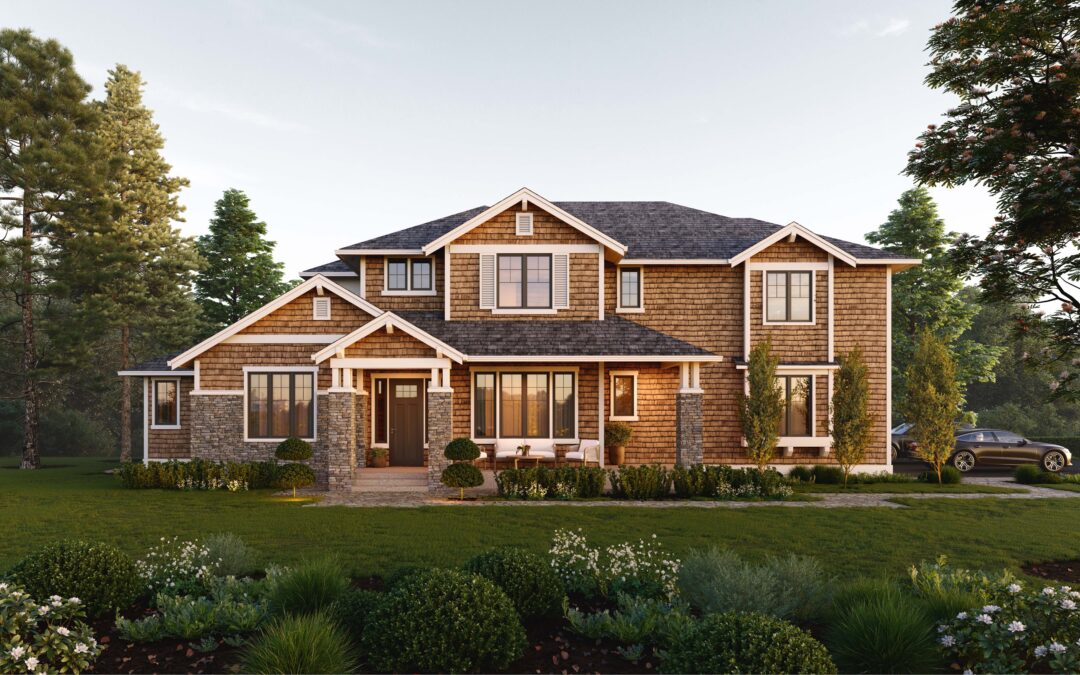
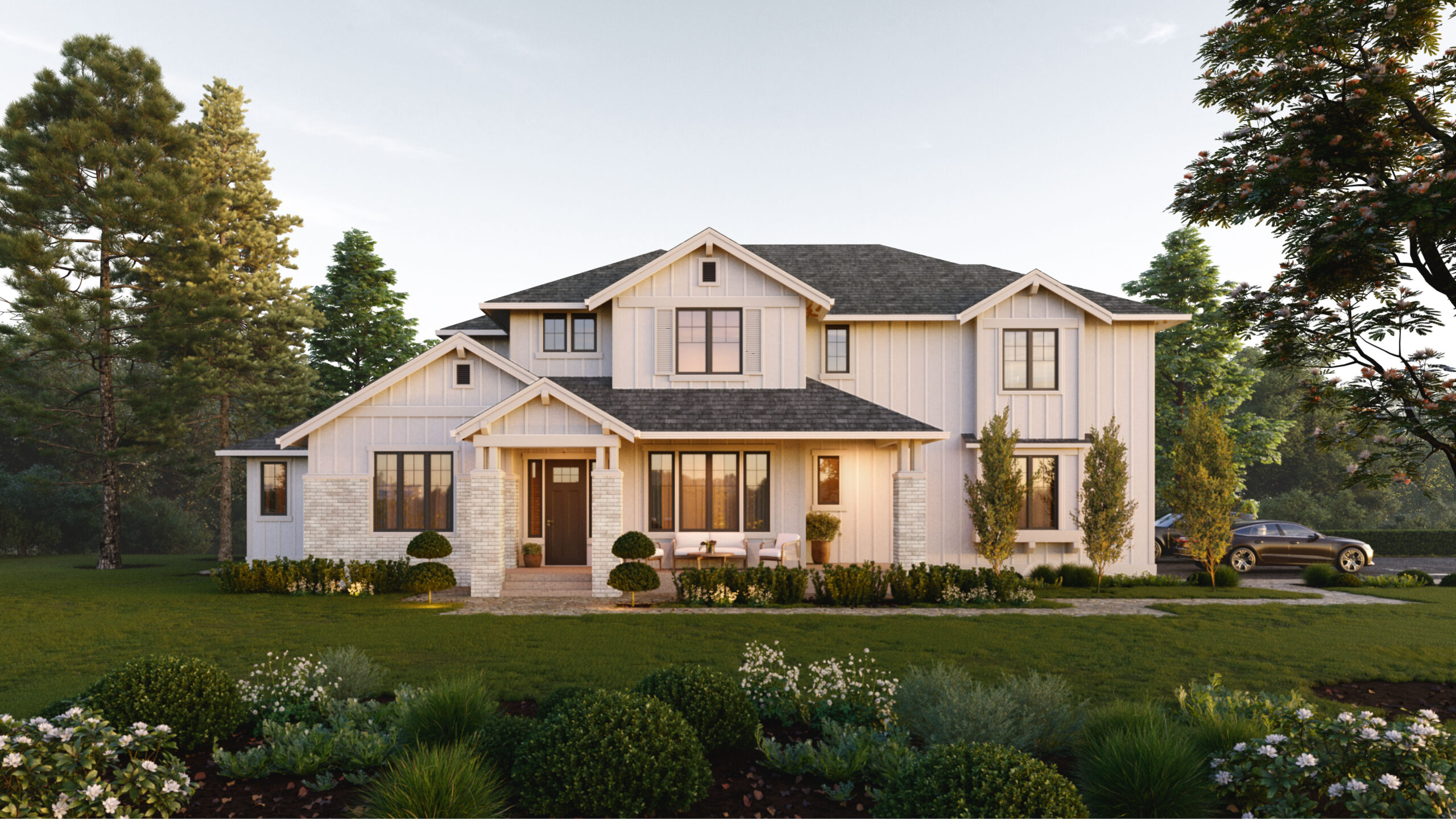
A single-family home rendering with stone accents, a cozy porch, and well-maintained greenery.

How Unreal Engine Fits In

Unreal Engine brings an unprecedented sense of immediacy to the design process. In studios that have adopted it, static images are just the starting point. Now, rooms can be explored in real time. As you move through a digital space, the reflections in glass and water change naturally. Sunbeams travel across the floor in tune with the time of day. A designer can swap a marble countertop for polished concrete in a matter of seconds. The client’s questions, what does this space feel like, how will my furniture look, can we see this from another angle, are no longer left to the imagination.

One visualization artist described a recent project where the client could walk through the model virtually, requesting adjustments on the fly. The ability to make live changes created a sense of shared authorship, as if everyone in the room was helping shape the building together. Decisions that once took weeks of back-and-forth became instantaneous, and the design moved forward with a sense of clarity that is rare in the industry.

Rendering of a Utah rooftop multi-family building, showcasing modern design with communal spaces, greenery, and outdoor seating areas.

Collaboration in Real Time

In many studios, meetings now take place inside the digital model. Project teams and clients can log in from across the world, touring an upcoming development together as if they were on site. Someone in New York might open doors and examine finishes, while a partner in London experiments with lighting options. Notes and changes are recorded live, eliminating the delays of traditional feedback cycles.

Unreal Engine’s flexibility means that each project can be as interactive as needed. Some clients want a guided tour with cinematic flair. Others ask for a hands-on walkthrough, controlling every step themselves. Studios can easily offer both, along with flythrough videos, panoramic stills, or even interactive presentations that run directly in a web browser.

Transforming the Client Experience

The architectural visualization studio’s mission remains rooted in understanding and communication, but the experience for clients has never been richer. When a developer sees two competing lobby designs side by side, comparing finishes and moving through each option, decisions come faster and with greater confidence. Interior designers experiment with bold colors and statement pieces in a risk-free digital environment. Even homeowners with little design experience quickly grasp the potential of their future spaces, thanks to the vivid realism and ease of navigation.

Studios report that clients are more engaged and invested throughout the project. Visualization is no longer a one-way presentation, but a shared discovery. This shift builds trust and often reveals creative opportunities that might have gone unnoticed on paper.

Looking Toward Tomorrow

Architectural visualization studios are now at the center of a design revolution, quietly powered by Unreal Engine’s real-time rendering. What once took days of careful rendering now happens instantly. Teams experiment more freely, and the creative process welcomes more voices into the fold.

As the technology continues to develop, studios will likely find even more ways to make architecture accessible, collaborative, and alive. The next time you step into a space that feels both surprising and inevitable, chances are the journey began in a visualization studio, guided by a tool that once only belonged to gamers but now belongs to dreamers and builders alike.

Let’s Build the Future, Together.

Contact us today to learn how our industry-leading 3D rendering services can help you sell more homes, faster.

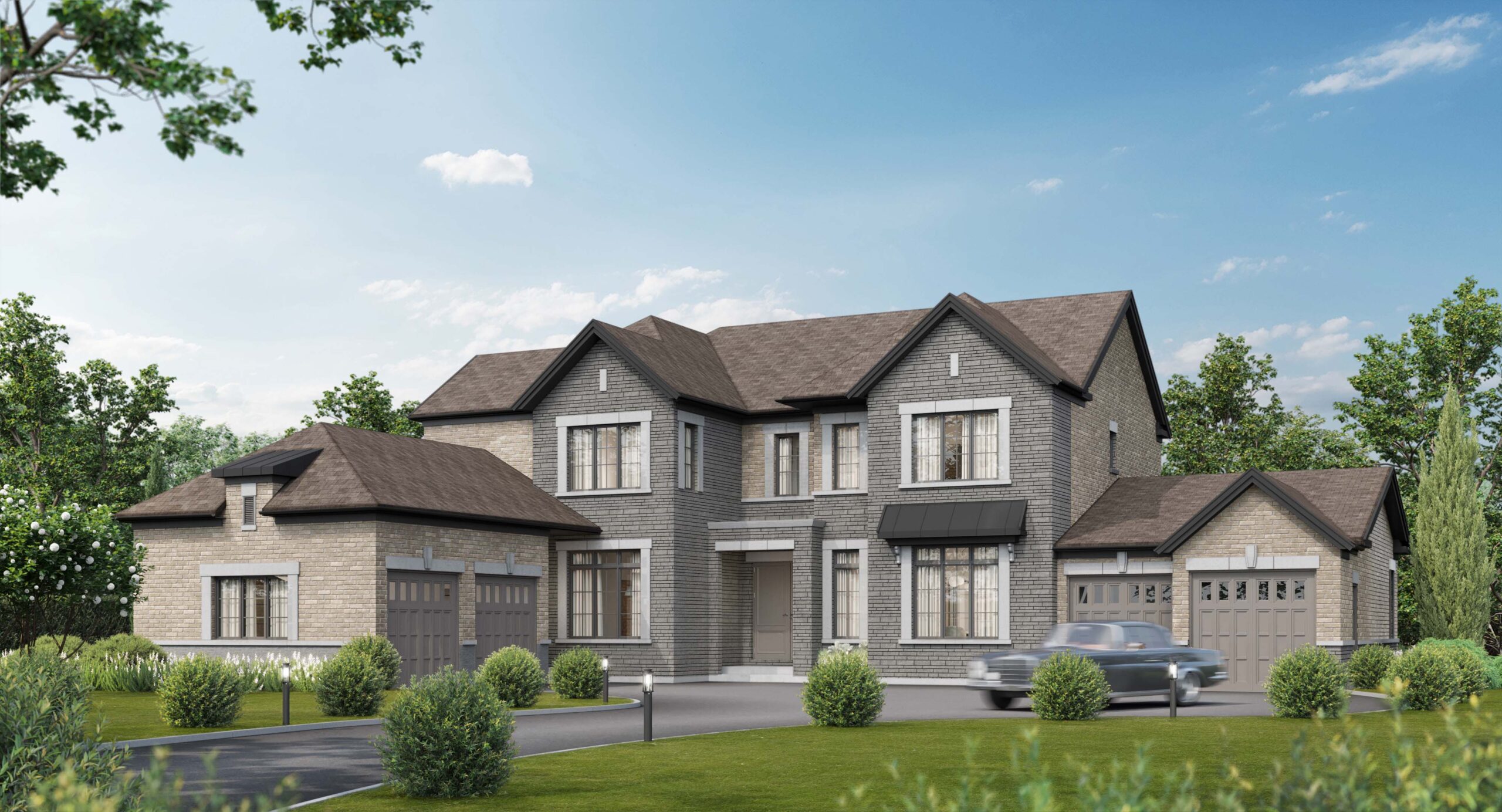
A 3D visualization of a single-family home featuring modern architecture, a spacious front yard, and a sleek two-car garage.
Why 3D Rendering is Essential for Single-Family Home Builders

Why 3D Rendering is Essential for Single-Family Home Builders

Why 3D Rendering Beats Traditional Blueprints for Homebuyers


For years, traditional blueprints have been the industry standard for home construction. While they provide the technical details builders need, they often leave homebuyers confused. Most buyers don’t have the ability to translate a 2D floor plan into a real-world space, making it difficult for them to visualize their future home. This uncertainty can lead to hesitation, delays, and even lost sales.

This is where 3D rendering is transforming the home-buying process. Instead of relying on flat, hard-to-decipher blueprints, buyers can now see high-quality, photorealistic visuals that bring their future home to life. At Radical Galaxy Studio, we specialize in architectural visualization for both large production builders and custom home builders, providing the tools to sell homes faster, improve client confidence, and enhance the design process.

Single Family Home Rendering

Why Blueprints Alone Aren’t Enough for Homebuyers

While essential for construction teams, blueprints are not designed with homebuyers in mind. They lack depth, perspective, and the emotional connection buyers need to feel confident in their decisions. Many struggle to understand room proportions, ceiling heights, and how different spaces flow together. This can lead to confusion, second-guessing, and an overall longer decision-making process.

In contrast, 3D renderings provide clarity at first glance. Buyers can instantly see how natural light fills a living room, how spacious an open-concept kitchen truly feels, and how their selected finishes will come together in a cohesive design. Instead of guessing, they can experience their home before it’s built.

A single-family home rendering with stone accents, a cozy porch, and well-maintained greenery.

How 3D Rendering Helps Builders Close Sales Faster

For large production builders, pre-sales are a critical part of the business. Selling homes that haven’t yet been built requires more than just a paper floor plan. 3D renderings allow builders to market homes before construction begins, helping buyers commit with confidence. With detailed visuals, they can explore different exterior styles, interior finishes, and layout options, all before the first foundation is poured. This accelerates sales and reduces uncertainty, leading to faster closings.

For custom home builders, 3D rendering is even more valuable. Clients investing in a one-of-a-kind home want to be involved in every design detail. With interactive visualizations, they can preview different floor plans, materials, and color palettes to ensure their home looks exactly as they envision. This not only enhances customer satisfaction but also reduces costly change orders later in the construction process.

Master bedroom Rendering

The Impact of 3D Rendering on the Homebuying Experience

Beyond just providing visuals, 3D renderings create a smoother and more engaging home-buying experience. Buyers feel more empowered when they can see and understand what they’re purchasing. Instead of flipping through confusing technical drawings, they can walk through virtual models, compare different home configurations, and make informed decisions faster.

For builders, this means fewer revisions, less back-and-forth with indecisive buyers, and a more streamlined sales process. It also enhances marketing efforts, high-quality 3D renderings can be used in brochures, websites, and social media, attracting more potential buyers before a community or custom home is even built.

The Future of Home Sales is Visual

The way buyers shop for homes is evolving. Today, they expect an interactive, visually driven experience that helps them make confident decisions. Blueprints alone no longer meet their expectations. Builders who adopt 3D rendering, virtual reality (VR), and augmented reality (AR) will stay ahead of the competition, selling homes faster and providing an unmatched customer experience.

If you’re looking to elevate your sales process with high-quality 3D visualization, Radical Galaxy Studio has the experience and expertise to help. Whether you’re a large production builder looking to enhance pre-sales or a custom home builder needing a more interactive design process, we have the tools and processes in place to bring your projects to life.

Let’s Build the Future, Together.

Contact us today to learn how our industry-leading 3D rendering services can help you sell more homes, faster.

A 3D visualization of a single-family home featuring modern architecture, a spacious front yard, and a sleek two-car garage.
The Evolution of Real Estate Marketing

The Evolution of Real Estate Marketing

Real estate marketing has undergone a remarkable transformation, shifting from traditional approaches to embracing cutting-edge strategies that connect with buyers on a deeper level. Gone are the days when a newspaper ad or basic brochure was enough to attract attention. Today’s marketers rely on a blend of technology, storytelling, and immersive experiences to captivate buyers and close deals, often long before a project is completed or even started.

This evolution reflects the changing expectations of buyers, who now demand transparency, compelling content, and the ability to explore properties in ways that feel tangible, even if the property exists only as a concept. Developers and marketers must work together to deliver on these expectations, making real estate marketing not just about selling homes but about creating a holistic experience.

Technology Changing Real Estate Marketing

Technology has become the backbone of modern real estate marketing, with tools like virtual reality, augmented reality, and 3D renderings allowing potential buyers to envision properties that are still under development. Whether it’s through a smartphone, tablet, or an interactive touchscreen at a sales center, buyers can explore detailed layouts, inspect finishes, and virtually walk through spaces with striking realism.

This approach helps address a significant challenge in real estate: showing buyers the potential of something that doesn’t yet exist. The ability to visualize a future home provides clarity and confidence, two key factors that influence purchasing decisions.

At the forefront of these innovations is Radical Galaxy Studio, a leader in real estate marketing that specializes in creating immersive, high-quality 3D renderings and virtual experiences for new developments. By blending cutting-edge technology with compelling storytelling, the company helps developers bring their visions to life and connect with buyers on a deeper level.

Technology in real estate marketing goes beyond visual rendered content. Artificial intelligence is also chaning how marketers interact with buyers, offering chatbot assistance, analyzing user behavior to tailor content, and generating insights that help refine campaigns. AI-driven tools streamline workflows, making it easier to match properties with the right audience and deliver a seamless buyer journey.

Single Family Home Rendering

Differentiation in a Competitive Market

In a crowded marketplace, differentiation is more important than ever. Many properties, especially pre-sales, share similar characteristics, so marketers must find ways to highlight what sets a development apart. Without a clear value proposition, projects risk becoming commoditized, leaving price as the primary differentiator, a scenario no developer wants.

Marketers play a crucial role in helping developers craft unique selling points, often collaborating from the earliest stages of a project. This might include recommending amenities, designing layouts, or selecting smart-home features that align with buyer preferences. For example, a project with a rooftop deck, integrated smart technologies, or innovative communal spaces can stand out in a sea of similar offerings.

Such differentiation not only attracts attention but also allows developers to command premium prices. Buyers are willing to invest in properties that offer something special, whether it’s a sustainable design, luxury finishes, or a community-oriented lifestyle.

Cortland Arlington architectural visualization rendering of the lobby redesign

Reaching Buyers Where They Are

The digital age has revolutionized how marketers connect with potential buyers. Social media platforms like Instagram, TikTok, and YouTube have become essential tools for targeting specific demographics and showcasing properties in dynamic, engaging ways.

Short video clips, in particular, have proven to be highly effective in capturing attention. A quick, well-crafted video that highlights a property’s key features or shares testimonials from satisfied buyers can generate far more engagement than static images or text. These videos offer an opportunity to tell a story, making the property feel personal and relatable.

Beyond social media, other platforms like WeChat and Reddit are being used to reach niche audiences. This targeted approach ensures that marketing dollars are spent effectively, focusing on buyers who are most likely to take action.

The Power of Storytelling

At the heart of every successful real estate marketing campaign is a compelling story. Buyers aren’t just purchasing a home; they’re investing in a lifestyle and a community. Highlighting the unique character of a neighborhood, from its local history to its amenities, helps buyers envision their future life there.

This narrative approach builds trust and emotional connection, two factors that are critical in high-value purchases like real estate. Buyers want to feel confident that the developer will deliver on their promises and that their investment will provide both financial and personal rewards.

For example, a campaign might feature testimonials from future neighbors, insights into nearby schools and parks, or a video series exploring the neighborhood’s culture. These elements make the property feel like more than just a structure, they make it feel like home.

The Future of Real Estate Marketing

As technology continues to advance, the possibilities for real estate marketing are virtually limitless. AI and data analytics will enable even more personalized campaigns, while tools like virtual and augmented reality will become increasingly sophisticated.

But while technology plays a critical role, the human touch remains irreplaceable. Buyers want to feel valued and understood, which is why in-person experiences, such as presentation galleries and VIP events, are still essential. These touchpoints allow buyers to engage with the property on a deeper level, ask questions, and make informed decisions.

Ultimately, real estate marketing is about creating connections, between buyers and properties, between developers and communities, and between the present and the future. By combining technology, creativity, and storytelling, marketers can ensure that their campaigns resonate with buyers and drive successful outcomes.

Exterior rendering of a modern adaptive reuse office building in Houston, featuring large glass windows, exposed brick, and metal accents with surrounding greenery and walkways