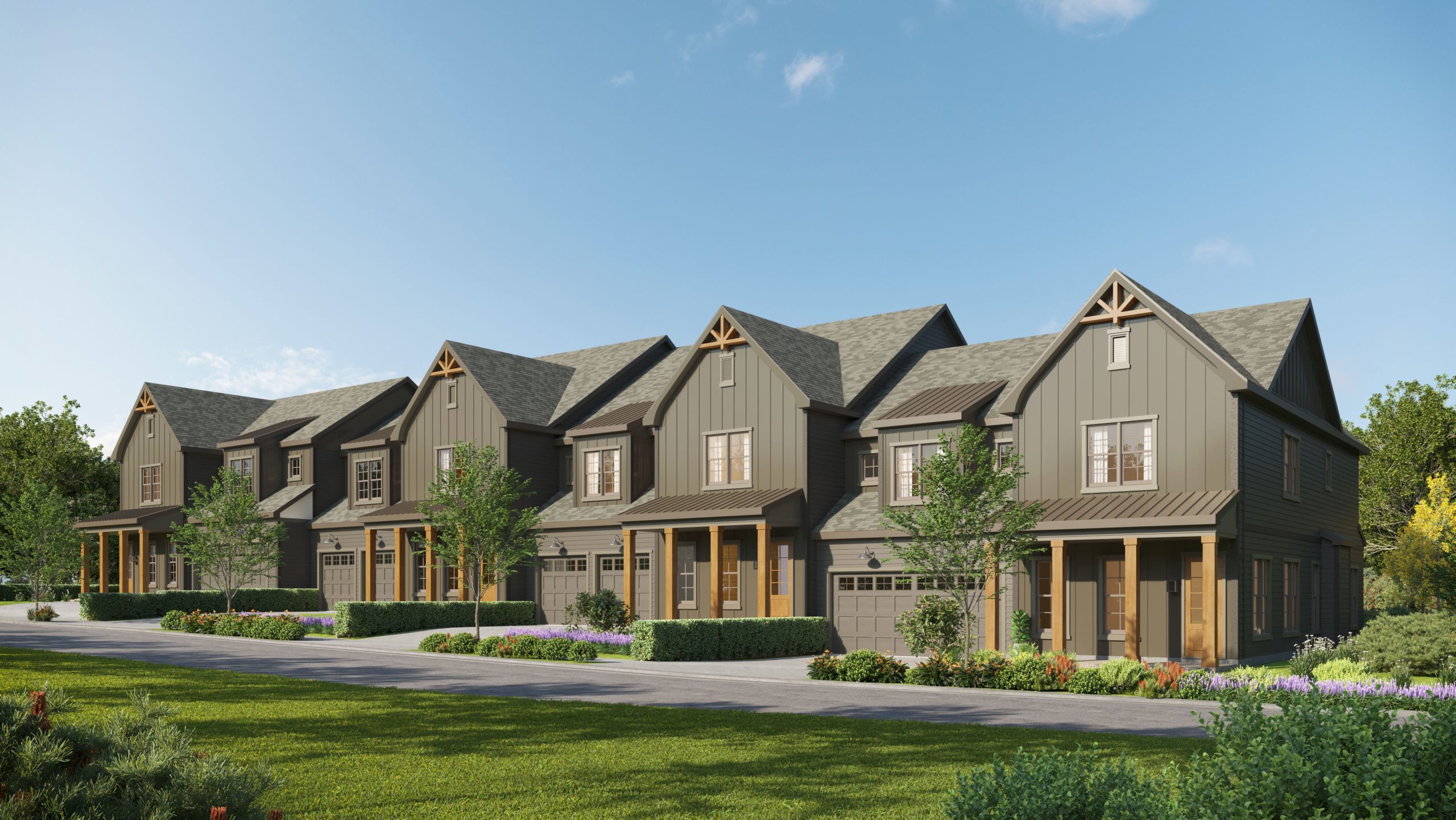
Why the Best Mixed-Use Developments Are Replacing Scale Models with Interactive 3D Masterplans
How Do You Sell a Mixed-Use Development Before It’s Built?
Every large mixed-use development faces the same challenge: selling a multi-acre project to investors, municipal boards, and buyers before it physically exists.
For years, the answer was architectural visualization, photorealistic renderings, animations, and masterplan visuals that helped stakeholders understand and believe in a project before ground broke. Today, the developers moving fastest on pre-sales are going further: interactive 3D masterplans that let stakeholders explore the project in real time and make decisions faster than any static collateral allows. Across dozens of mixed-use projects representing billions in development value, these tools have helped teams tell the story of places still years from completion.
But that shift. from static to interactive, is recent, and most developers haven’t made it yet.
Plenty of teams are still rolling out the foam model for investor day. Fair enough. But the developers moving fastest on pre-sales have replaced static collateral with something a scale model never could: an interactive 3D masterplan that lets stakeholders walk the project, understand the vision, and make decisions faster.
We say “Unreal Engine” and watch eyes glaze over. Also fair. Nobody hires a visualization studio to learn about game-engine architecture.
So here’s the only framing that matters: developers using interactive 3D masterplans are closing faster, presenting to more stakeholders in fewer meetings, and spending less money keeping their sales collateral current.
Here’s how it actually plays out.
Investors and planning boards experience the full development in a single browser session — no flights, no physical model room required
Buyers explore individual units, amenities, and view corridors at their own pace — and arrive at sales conversations already invested
Design changes update in days, not weeks — no $30,000 scale model rebuild
The same experience runs at a sales center in Austin and a laptop in London simultaneously
The Scale Model Problem Nobody Talks About
Physical scale models carry hidden costs that rarely show up in the initial budget conversation. The model itself, for a significant mixed-use development, can run $50,000 to $150,000 to produce. Then the design changes, as it always does. A floor plan revision, a massing update, a new amenity configuration. The model is now out of date. We’ve seen teams present an out-of-date model to investors for six months because rebuilding it wasn’t in the contingency budget. That’s not a hypothetical.
There’s also the distribution problem, which sounds boring until you’re trying to present to a capital partner in Singapore at 9 AM their time. A physical model lives in one room. It doesn’t travel. It doesn’t join a Zoom call. It doesn’t update between the morning investor meeting and the afternoon planning board session.
But the thing that nobody talks about enough: it can’t answer questions. A buyer standing over a physical model is still on the outside of a miniature. They can’t step in. They have no idea what the lobby actually feels like at human scale, or what the view from the 14th floor northeast corner actually looks like. The model shows the project exists. It can’t make someone feel like they belong in it.
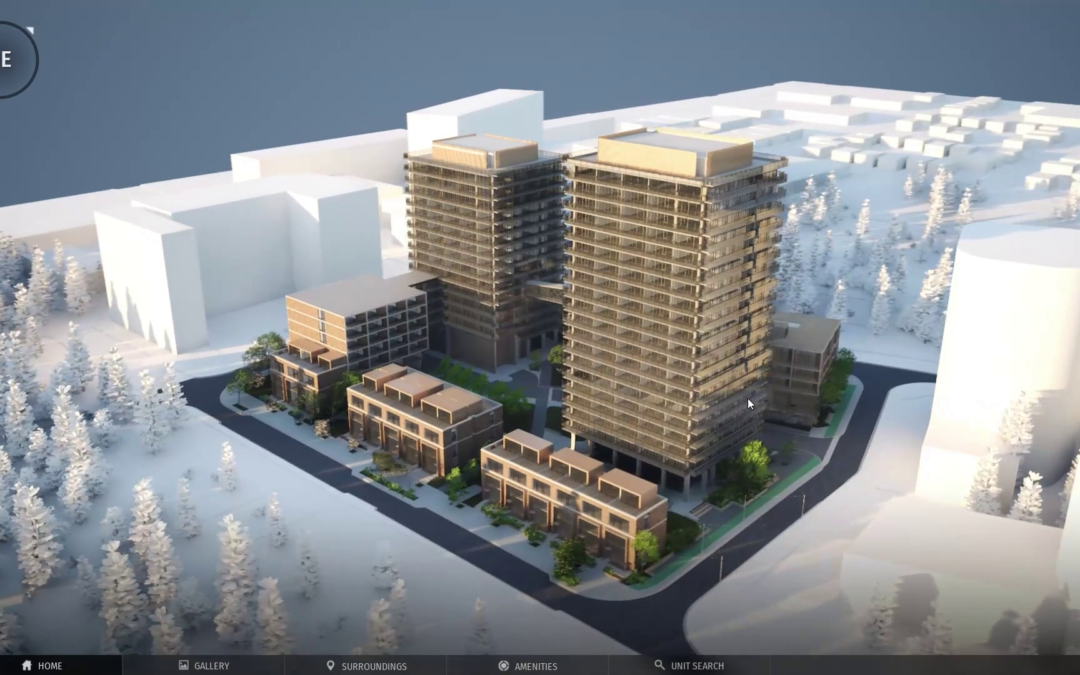
Urban context model built in Unreal Engine, Seattle development, Radical Galaxy Studio
What an Interactive 3D Masterplan Actually Does
An interactive masterplan built in Unreal Engine isn’t a rendered video you can watch. It’s an environment you navigate, with real-time control, live camera movement, and interactive elements that respond to the user. That difference is the whole point. At this stage, using a physical model or a static rendering package as your primary sales tool for a large mixed-use development is a competitive disadvantage. Full stop. Here’s what the alternative actually includes.
Full Site Navigation at Any Scale
Users can pull back to a bird’s-eye view of the entire masterplan, seeing how the development relates to its surrounding neighborhood, transit infrastructure, and urban context — then zoom down to street level and walk through a specific corridor, plaza, or building entry. The same experience captures both the strategic overview and the human-scale detail.
Unit-Level Exploration and Finish Configuration
From the masterplan level, buyers can navigate directly into individual units. Once inside, they can toggle between finish packages, flooring, cabinetry, countertops, and see the changes applied in real time. This capability has a direct impact on upgrade revenue: buyers who’ve visualized a premium finish package are significantly more likely to select it.
Time-of-Day and Environmental Lighting
One of the most powerful tools for closing premium units: the ability to show a buyer exactly what their view looks like at sunrise, at golden hour, or on a cloudy afternoon. Unreal Engine’s sky and atmospheric systems simulate real-world lighting conditions with physical accuracy. A northeast corner unit with city views sells differently when the buyer has experienced it at 7 AM on a clear morning.
Amenity Spaces in Full Context
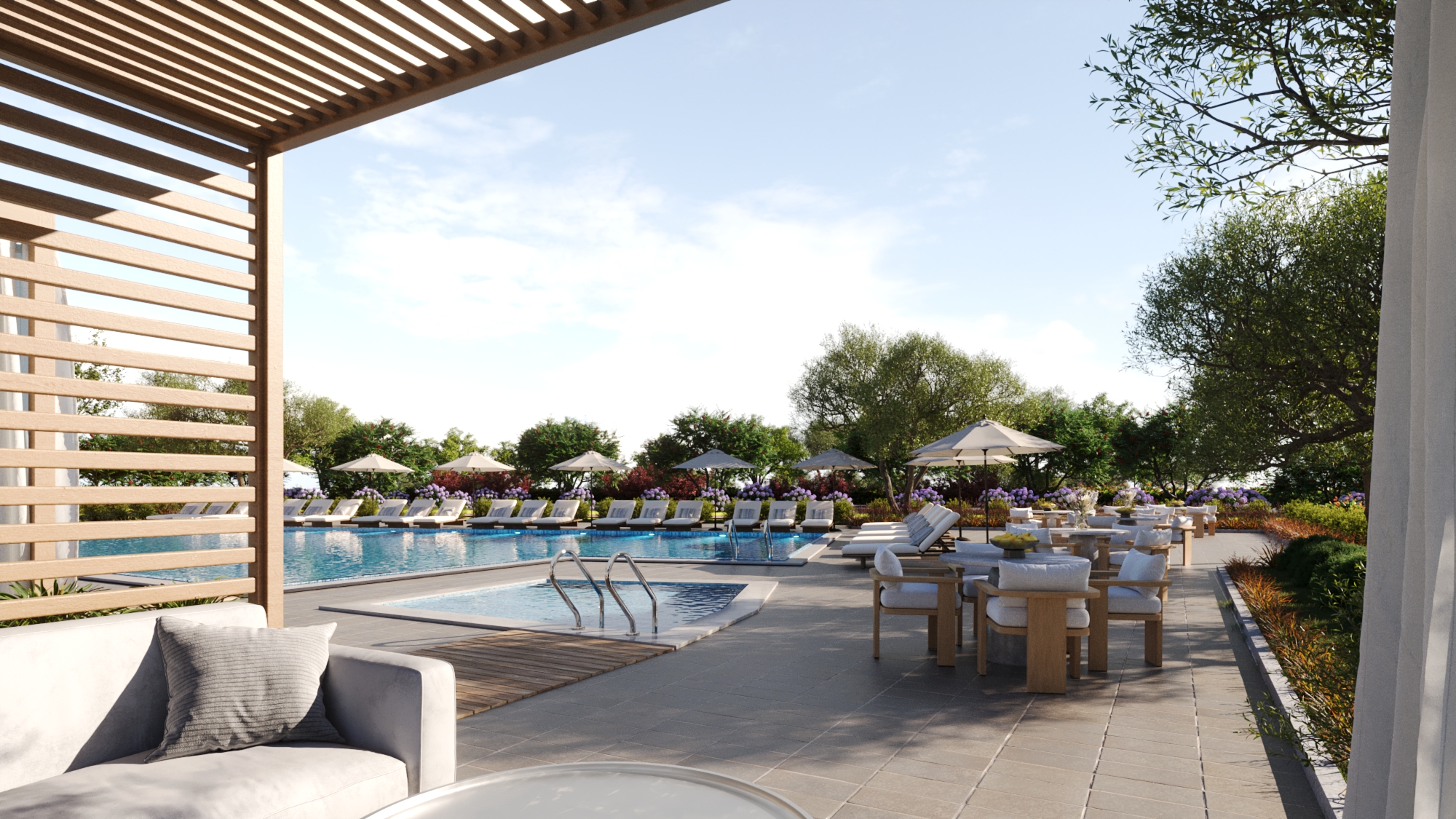
Rooftop pools, co-working lounges, fitness centers, ground-floor retail activations — the amenity package is often what closes a buyer who’s on the fence between two comparable projects. An interactive masterplan lets buyers explore every amenity space at their own pace and builds the kind of ownership feeling that a floor plan description never can.

Interactive masterplan experience in Unreal Engine — Radical Galaxy Studio
Scale Model vs. Interactive 3D Masterplan: The Real Comparison
A client asked us to help them justify the budget internally. Their CFO wanted a side-by-side. We put this together, and filling in the physical model column was honestly harder than we expected, because most of the cells just came up empty. To be fair, we added the one thing physical models genuinely do better.
| Capability | Physical Scale Model | Interactive 3D Masterplan |
|---|---|---|
| Design update speed | Weeks to rebuild, significant cost | Days to update — less if it’s just materials or finishes |
| Remote access | Requires shipping or travel | Browser link, any device, anywhere |
| Interior exploration | Exterior massing only | Full unit walkthroughs, amenities, every space |
| Finish configuration | Not possible | Real-time toggle between packages in the unit itself |
| View simulation | Approximate — you’re looking at a miniature from above | Accurate views from any unit, any floor, any time of day |
| Multi-stakeholder access | One room, one meeting at a time | Simultaneous access globally — same session if needed |
| Planning board use | Can work for straightforward projects. Gets complicated fast on mixed-use | Live walkthrough — you can answer questions by navigating to the exact spot in question |
| Tactile presence in a room | Genuinely good — there’s something about a physical object that commands attention | A screen in a sales center gets close, but it’s not the same |
| Ongoing useful life | Frozen at point of build — accurate for maybe one design iteration | Updates as the design evolves, stays current through delivery |
We’ve built both for clients over the years. The physical model still gets used, usually alongside the interactive experience for the opening sales event. After that, it tends to sit in the corner of the sales office while the browser link does the actual work.
Any device
No app, no hardware. Runs in a browser, we’ve had investors pull it up on their phones mid-meeting
Days not weeks
Typical update turnaround when design changes come in, vs. the rebuild cycle on a physical model
One link
Same session, same experience, we’ve had Austin, London, and Dubai in the same walkthrough simultaneously
From our project work. Your mileage will vary based on project scope and how much the design is still moving.
Have a large mixed-use or multifamily project coming up? We can scope an interactive masterplan for your specific timeline and stakeholder needs.
How Pixel Streaming Makes This Accessible Everywhere
This is usually where we lose people. “Sounds great, but our investors aren’t going to install software or buy a gaming PC.” Right, they won’t have to. The barrier that used to limit real-time 3D experiences was hardware: running a full-fidelity Unreal Engine environment requires a serious GPU workstation. Nobody outside a visualization studio or a very well-equipped sales center has one sitting around.
Pixel streaming solves this in a way that’s almost annoyingly simple. The Unreal Engine experience runs on powerful cloud servers in AWS. The user gets a live video stream in their browser and controls it with their mouse or touchscreen, inputs go to the server, visuals stream back. It feels exactly like running it locally. Works on a laptop, a tablet, a phone. The only requirement is a decent internet connection.

Co-working amenity space visualization, mixed-use development, Radical Galaxy Studio
For developers working with remote investor groups, international buyers, or stakeholders across multiple time zones, this changes the sales process fundamentally. The sales center is no longer a physical location you have to get people to. It’s a link you send, and it delivers the full experience wherever the recipient happens to be.
The Mixed-Use Use Case: Why This Project Type Benefits Most
Every project type benefits from better visualization. But mixed-use is the one where a static package genuinely breaks down, and where we see the biggest gap between what teams are trying to communicate and what their materials actually convey.
Mixed-use projects have multiple building types, multiple tenant profiles, multiple use activations across different floors and zones. A residential buyer cares about their unit and the rooftop. A retail tenant cares about ground-floor activation and pedestrian traffic. An office tenant cares about parking, lobby presence, and floor plate efficiency. An institutional investor cares about the whole picture. Presenting all of that in sequence — meeting by meeting, stakeholder by stakeholder, is exhausting and slow, and something always gets lost in translation.

Aerial masterplan visualization — Caribbean resort development, Radical Galaxy Studio
An interactive masterplan holds all of it in one place. Each stakeholder follows the threads that matter to them, the residential buyer digs into their unit, the retail tenant checks the ground-floor activation, the investor navigates the full site. Nobody sits through a presentation built for someone else’s questions. It sounds simple. It changes how quickly deals move.
Real Project: What This Looks Like in Practice
Large-Scale Mixed-Use Launch — Multi-City Stakeholder Team
- All major investor presentations conducted remotely via browser link — zero travel required
- Planning board walkthrough conducted live in a single session, with real-time navigation of contested design elements
- Residential buyers explored unit configurations and finish packages before the sales gallery opened
- Design changes from investor feedback incorporated in days, not weeks — and immediately visible in the live experience
Presenting to investors or planning boards in the next 90 days? An interactive masterplan can be ready before your first major stakeholder meeting.
The Amenity Layer: Where Interactive Masterplans Directly Drive Revenue
One dimension of interactive masterplans that developers consistently undervalue until they’ve seen it in practice: the impact on amenity upgrade selection and premium unit premiums.

Amenity deck visualization — multifamily development San Diego, Radical Galaxy Studio
This is the part that usually surprises developers most, not the technology, but where it moves the revenue needle most directly.
When a buyer can walk from their unit directly to the rooftop pool, stand at the edge of the amenity deck, look out at the view, and feel the actual scale of the space, their willingness to pay a premium for units with that proximity goes up. Not a little. Meaningfully. The amenity package stops being a line item in a brochure and becomes something they’ve already experienced. That’s the difference between “sounds nice” and “I need this.”
Same thing happens with finish packages. We’ve watched buyers toggle between standard and premium finishes in a real-time walkthrough of their actual unit, their specific floor, their specific view, and select the upgrade at a rate that doesn’t happen off a sample board in a sales office. The sample board is abstract. The unit is theirs. That difference shows up in the numbers.
Common Questions from Developers
How much does an interactive 3D masterplan cost?
Honestly, the cost question is the wrong starting point, but we understand why it comes up first. The real question is what it costs you not to have it: a delayed investor commitment, a planning round that requires additional presentations, a sales launch where buyers are comparing your PDF floor plans against a competitor’s interactive experience. Those delays on a mid-size development are worth far more than the visualization budget.
That said, here’s what we actually see: for a focused multifamily project, masterplan navigation, key amenity spaces, 2–3 unit types with finish toggling, you’re typically looking at $40,000–$80,000. For a full mixed-use masterplan with multiple building types, interior exploration across the development, and pixel streaming deployment, $100,000–$250,000 is the realistic range. Scope it to what your specific stakeholder journey actually requires, not everything needs to be fully built out on day one.
How long does it take to build an interactive masterplan?
On most of the mixed-use projects we’ve worked on, the full experience, brief to live, pixel-streamed and ready for investors, runs 8 to 16 weeks. The biggest variable isn’t us; it’s how mature the design documentation is when we kick off. Teams that come in with clean BIM or CAD and a clear brief on what the experience needs to do move through the faster end of that range. Teams that are still resolving massing or finish decisions mid-production stretch it out.
One thing that surprises most developers: starting earlier in the design process actually produces better work, not worse. Schematic-phase documentation is fine to work from. The process forces some design clarity, and it means the experience is ready for your first major stakeholder moment rather than catching up to a launch that already happened.
What do we need to provide to get started?
Less than most teams expect. CAD, BIM, or schematic drawings are the starting point, we work from early-stage documentation all the time. What matters more than document maturity is being honest about what’s locked vs. what’s still moving. If the rooftop amenity program is still being debated, we build around it, not through it. Trying to visualize something that changes two weeks later wastes everyone’s budget.
The most useful thing you can bring to a kickoff conversation isn’t a completed design package, it’s a clear answer to: who is the primary audience for this experience, and what do we need them to feel or decide by the end of it? Investor confidence, buyer deposit, planning approval, those are different goals, and they shape how we scope and build the experience. The cleaner that answer, the better the output.
Can the masterplan be updated as the design evolves?
Yes, and this is the thing that kills the physical model argument for good. The Unreal Engine environment is a live asset. When the design changes, we update it. Material and finish changes are quick; structural or massing changes take more work but they’re far cheaper than a scale model rebuild.
In practice, most of our ongoing projects work on a maintenance agreement with a defined number of update rounds built in across the pre-construction period. The experience stays current through investor rounds, planning review, sales launch, and right up to handover. We’ve had projects where the experience was live and actively used for two-plus years across the full development lifecycle, because it kept up with the project, rather than becoming a snapshot of what the design looked like on one specific Tuesday.
What’s Coming Next: Spatial Computing and the 1:1 Masterplan

Interior office visualization — Radical Galaxy Studio
Where this goes next is spatial computing, and the timeline is shorter than most people expect. The experience that exists today, navigable on a screen and streamed to any browser, is already a step change from what came before. But it’s also the foundation for something more immersive: a developer and an investor standing in the middle of a future plaza, at 1:1 scale, surrounded by buildings that won’t be framed for two years, talking through the design as if they’re already there.
We’re building toward that. The studios doing serious Unreal Engine work on interactive masterplans now are the ones who will be positioned to deliver it when clients start asking for it, because the underlying technology is the same. The delivery hardware is what’s still catching up.
If you’re a developer with a significant project in the pipeline, the honest question isn’t “is this the right technology?” It’s “how much of the pre-construction period are we willing to run without it?” The projects that move fastest tend to be the ones that answered that question early.
“The developers winning the pre-sale aren’t the ones with the best project on paper. They’re the ones who made the buyer feel like they were already home.”
Planning a mixed-use or multifamily launch? Let’s talk about what an interactive masterplan can do for your project.
We’ll walk you through scope, timeline, and exactly what to build to hit your investor and pre-sale targets.