
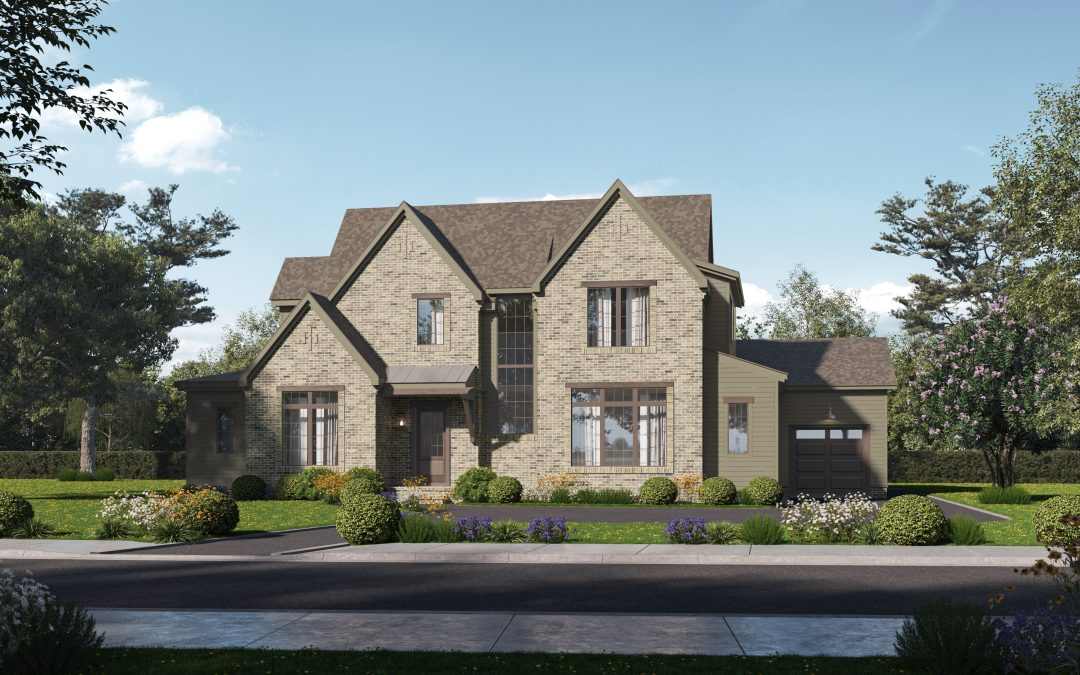
Single-family home exterior visualization — Radical Galaxy Studio
Production builders and custom home builders need fundamentally different visualization approaches. Production builders require scalable, repeatable visuals for high-volume marketing across many units and floor plans. Custom builders need detailed, iterative renderings that evolve with individual client decisions. Choosing the wrong approach wastes budget and slows sales.
In the same week we might deliver a full visualization package for a DR Horton community rolling out 200 units across three floor plans in Texas, and a single cinematic rendering of a custom spec home on a cliff in Bermuda. Both are single-family residential. That’s roughly where the similarity ends.
The brief is different. The deliverables are different. What success looks like is different. And the ROI logic, what the visualization is actually supposed to accomplish and how you measure whether it did, is completely different for each. We’ve worked with both kinds of clients long enough to have developed a pretty clear sense of where studios go wrong when they treat these as the same kind of project.
This post is our thinking on what separates the two, and what each type of builder actually needs from a visualization partner.
The Production Builder Problem: Visualizing at Scale
A national homebuilder running a high-volume production operation has a visualization challenge that’s fundamentally about pipeline efficiency. They’re not selling one house. They’re selling the same four or five floor plans dozens of times across multiple communities, often simultaneously, in markets that can have very different buyer profiles. The question isn’t “how do we make this house look beautiful?” though that matters, it’s “how do we create a visualization system that can work across all of this without breaking the budget or the timeline for any individual community.”
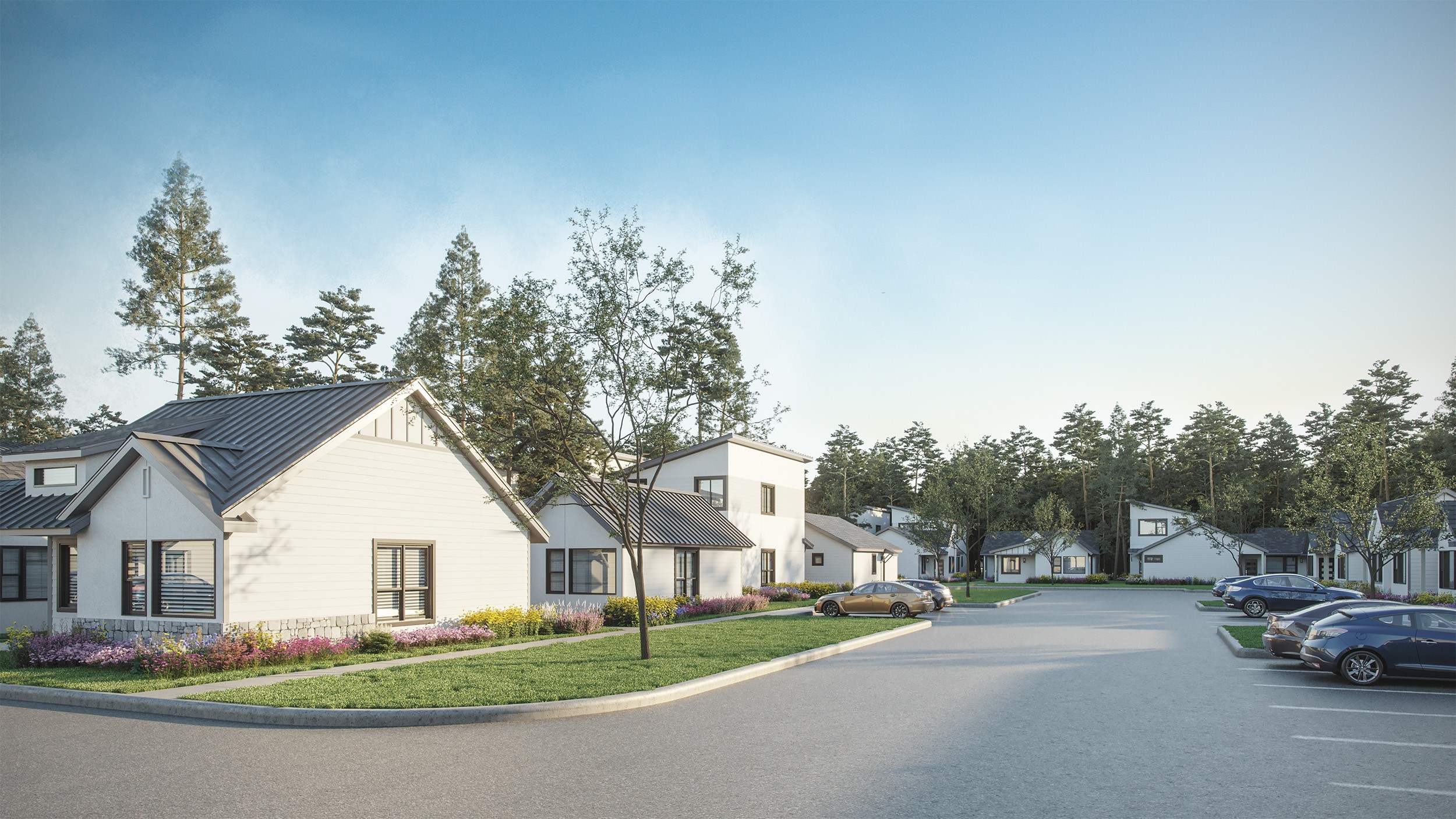
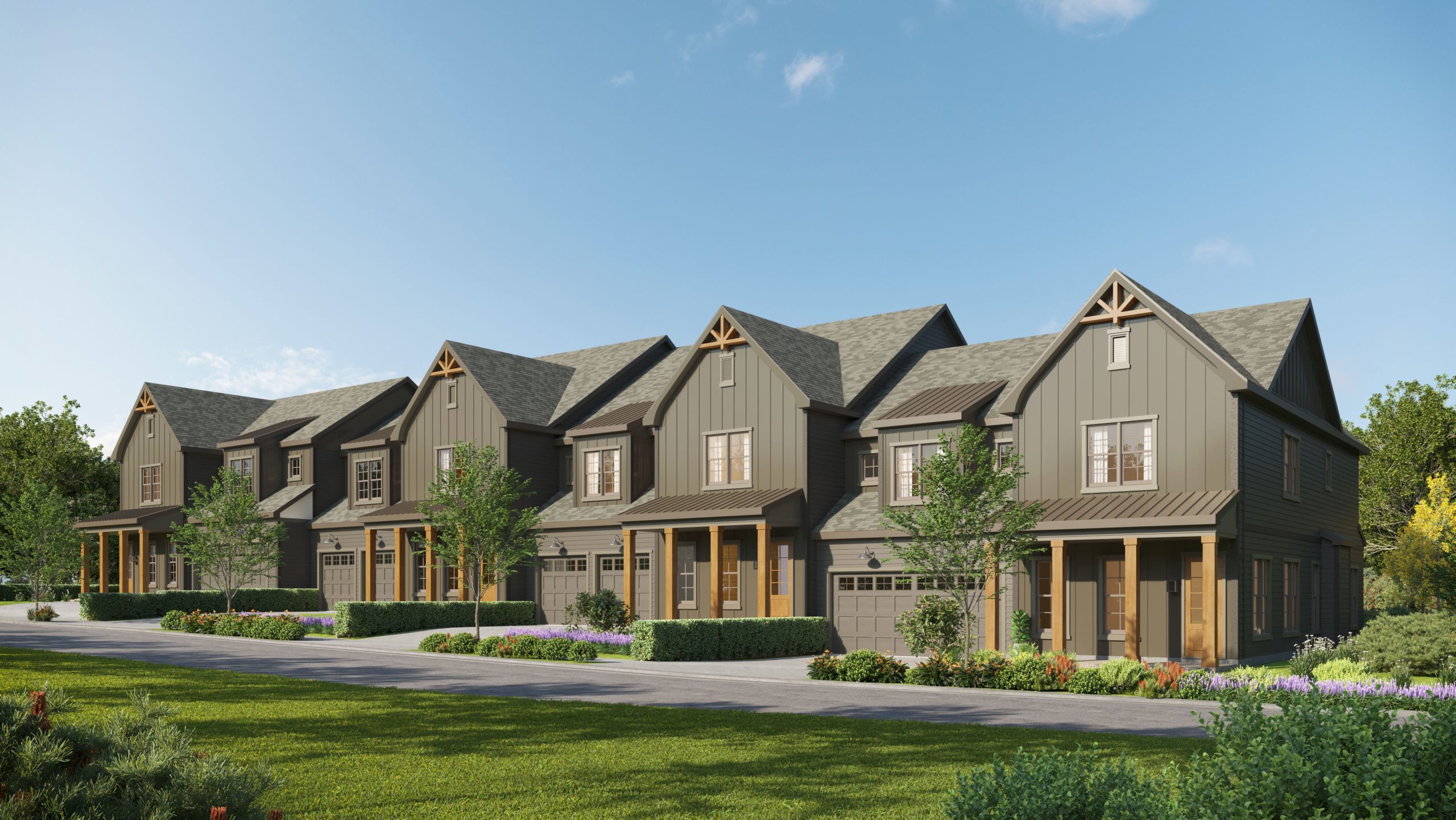
Street exterior visualization — residential development, Radical Galaxy Studio
The deliverables that matter most at the production end are different from luxury. An exterior hero render for the sales center. Interior images of the model home spaces, kitchen, primary suite, living area, that communicate the design package clearly and make the finish selections feel worth the upgrade price. Community amenity renderings if there’s a clubhouse or pool. And increasingly, interactive tools that let sales agents walk buyers through floor plan options and finish packages without needing a fully built model unit at every community.
What production builders often undervalue, and what consistently moves the needle on both traffic and conversion: the exterior rendering used in digital advertising. A high-quality exterior render in a paid social or display campaign outperforms lifestyle photography of comparable communities at a rate that surprises most marketing teams when they first A/B test it. The render is idealized in a way that a photograph of a partially built site or a completed home without staging never quite is. That idealization is doing commercial work, and it has a measurable impact on cost-per-lead.
This is where production work breaks most studios that aren’t built for it. Speed and consistency matter as much as quality at this scale, and they require a different kind of operational discipline. A production builder needs to know that when they brief a new community, the work comes back on time, on brand, and in a format that plugs directly into their marketing stack. Studios that are excellent at one-off luxury projects often struggle with this, not because they lack talent, but because the pipeline thinking and process rigor that production work demands is genuinely different from the bespoke creative approach a custom client calls for. Applying one mindset to the other is where most visualization relationships break down at the production end.
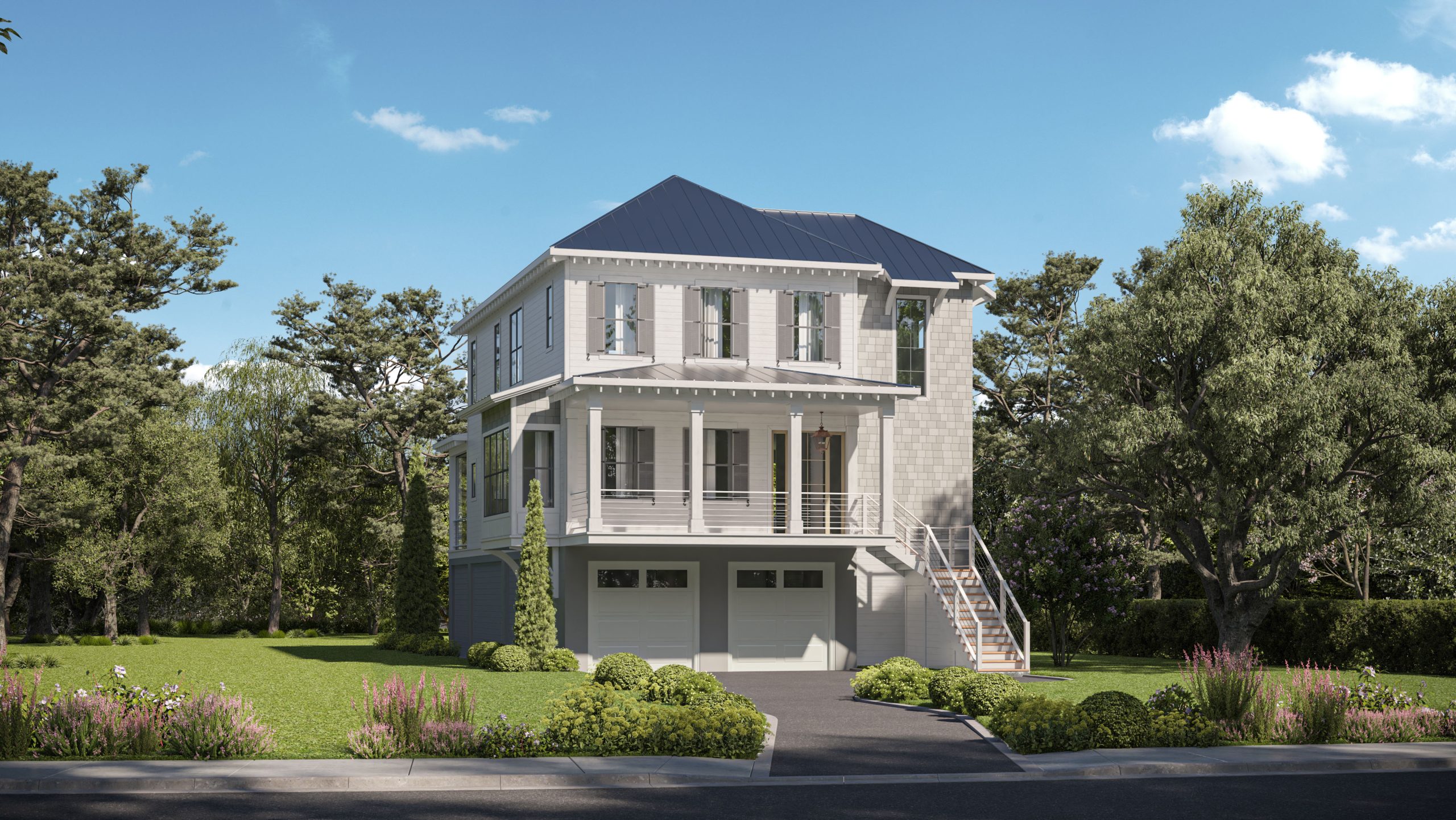
The Finish Package Problem, and Why It’s Worth Solving Properly
One of the most commercially significant visualization challenges for production builders is finish packages, and it’s the one that gets the least strategic attention. Most production builders offer two or three finish tiers, standard, elevated, premium, and the upgrade margin on a premium package can be substantial. The question is: how do buyers make that decision?
Historically, they make it in a design studio, standing in front of physical samples under showroom lighting, trying to imagine what those samples will look like in their actual kitchen. It’s a poor simulation of the actual experience, and a lot of buyers default to the standard package not because it’s what they want but because they can’t confidently visualize the upgrade. That uncertainty costs builders upgrade revenue on every sale where it happens.

Kitchen interior visualization showing premium finish package — Radical Galaxy Studio
Interactive finish visualization, showing buyers exactly what their specific floor plan looks like with each package applied, in the actual space, with accurate lighting, consistently moves upgrade selection rates. We’ve built these tools for production clients and the effect is straightforward: when buyers can see the premium countertop in their kitchen rather than on a sample board, they select it more often. The visualization pays for itself in upgrade revenue within a relatively small number of transactions.

Open-plan living and kitchen visualization — Radical Galaxy Studio
The Custom and Luxury Brief: Completely Different Goals
A custom home builder or luxury architect working on a high-end spec home is operating with a completely different set of priorities. There’s usually one home, one buyer target, one specific design intent that took months of collaboration to arrive at. The visualization isn’t a sales tool in the production sense, it’s a communication tool, a design validation tool, and at the premium end, a marketing asset in its own right.
What matters here isn’t efficiency. It’s exactness. The ability to show the client exactly how the steel and glass facade will read in morning light. What the great room feels like at dusk when the sliding walls open to the terrace. Whether the primary suite has the sense of privacy and scale the design is reaching for. These are questions that exist independently of any buyer, they’re design questions, and the visualization is part of the design process.

Luxury beachfront home visualization — Barbuda, Radical Galaxy Studio
The deliverables look different too. A luxury spec home might need a handful of exceptional hero renders, exterior at dusk, primary suite, the kitchen, plus a cinematic film that tells the story of the property in 60–90 seconds. That film ends up on the listing agent’s site, in the property brochure, at the real estate conference presentation. It does work across multiple months and multiple channels. The budget per deliverable is higher, the volume is lower, and every image carries more commercial weight than at the production end.
The brief conversation is also different. A production builder brief is largely functional, here are the floor plans, here are the three finish packages, here are the marketing specs. A luxury custom brief is as much about feeling as it is about specification. What does the client want someone to feel when they see this property? What’s the story of the land, the architecture, the lifestyle it represents? Getting that conversation right before production starts is the difference between visualization that elevates the property and visualization that accurately documents it. Both are competent. Only one is worth what the client is paying for it.
“At the production end, visualization is infrastructure, it has to scale, stay consistent, and hit its timeline. At the luxury end, it’s storytelling, it has to make someone want to be in a place they’ve never seen.”

What Actually Shows Up in the Sales Process
A few things matter equally at both ends of the market, and they’re worth naming because they’re also the things that get cut when a brief is moving fast.
Exterior lighting is one. Whether it’s a $350,000 production home in suburban Texas or a $15 million spec property in Aspen, the late-afternoon or dusk exterior render consistently outperforms the midday version in buyer engagement. The emotional register of warm light on a facade is not a luxury preference, it’s a human response, and it works at every price point. We’ve never had a client tell us the golden-hour version wasn’t better. We’ve had plenty tell us they didn’t budget for it upfront and then wish they had.
Interior scale accuracy is another. A kitchen that reads slightly too large, or a living room with furniture that’s subtly off-scale, undermines buyer confidence in ways they can’t always articulate but absolutely act on. We had a production builder client come back mid-campaign and say their sales team noticed buyers second-guessing the kitchen size. The rendering was dimensionally accurate, the furniture was slightly oversized, making the space read smaller than it was. Fixing it changed the conversation in the sales center. That’s the kind of thing that gets caught in a thorough review and gets missed when the timeline is tight.
This is also where we see teams get it wrong on a pretty regular basis. The brief comes in fast, the process is compressed, and the first thing that gets deprioritized is the review round. On a luxury custom project that’s fixable, there’s room in the timeline and the budget. On a production community launching in eight weeks, there usually isn’t. The renders go out, the campaign goes live, and three months later someone on the sales team is explaining to a buyer why the kitchen doesn’t feel quite the way the images showed. Not a disaster. Just avoidable friction that costs something.

Living room interior visualization — single-family residential, Radical Galaxy Studio
Community amenities are where the production side consistently underinvests and where the return is disproportionate to the cost. The clubhouse, the pool, the walking trails, these are often the deciding factor for a buyer comparing two communities at similar price points. And they’re almost always less developed in the visualization package than the home itself. The amenity render does something the floor plan renders can’t: it sells the lifestyle of the community rather than the specifications of a floor plan. That’s a different buyer trigger. The person who’s already decided on a price range but hasn’t decided on a community yet responds to it more than to one more kitchen rendering.

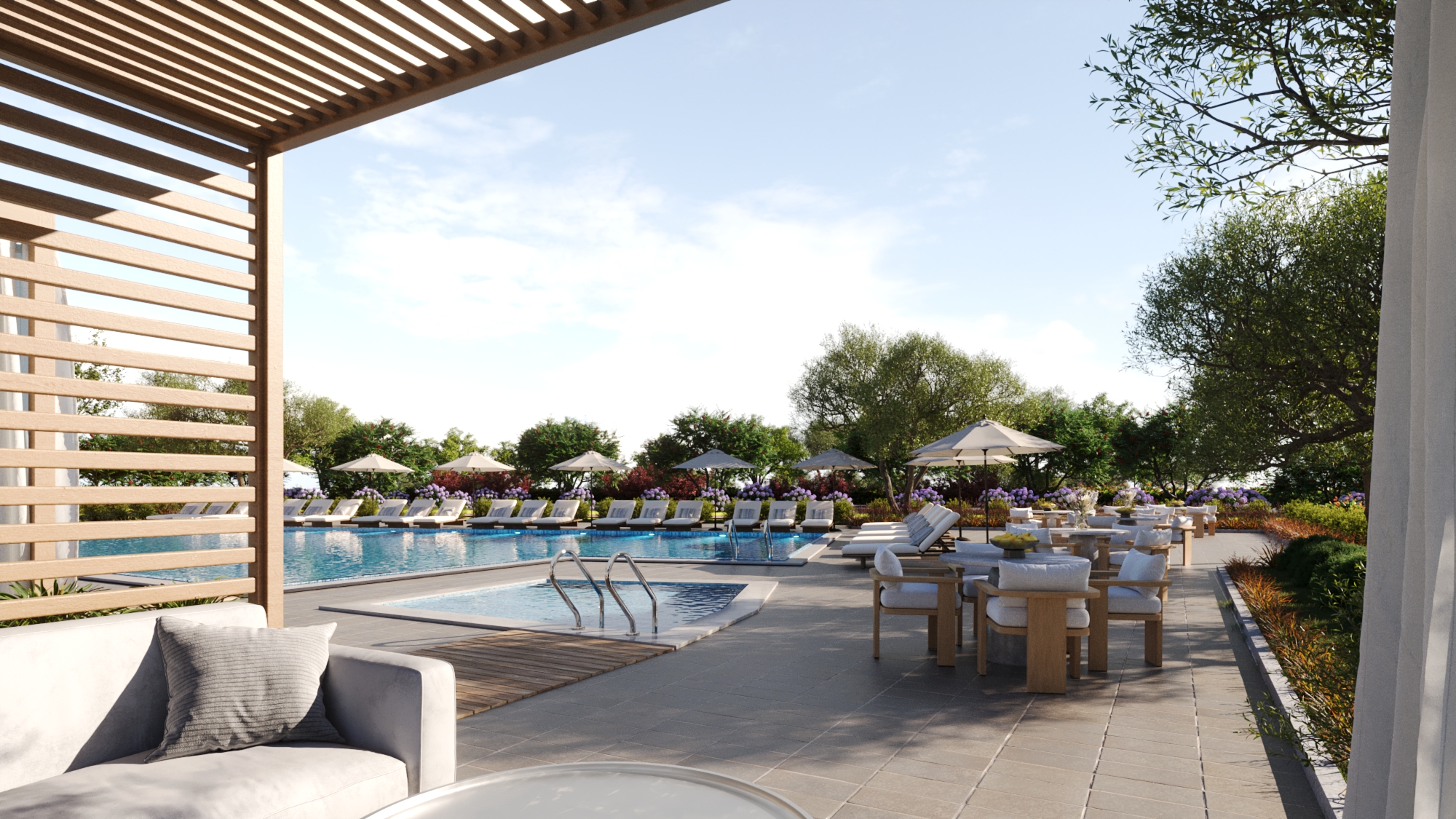
Community clubhouse and pool visualizations — Radical Galaxy Studio
Where the approaches genuinely diverge is revision tolerance. A production builder on a 90-day launch has no room for multiple creative rounds. The brief needs to be tight upfront and the first substantive deliverable needs to be close. A custom luxury project has room to iterate, the budget and timeline usually support it, and the design itself is often still being refined during the visualization process. Applying a custom creative process to a production brief, or production-efficiency thinking to a luxury custom project, is where most studio relationships break down. Both approaches are legitimate. Neither transfers to the other without damage.
Working on a single-family project — production or custom? We work across both and scope them differently. Tell us about yours.
A note on VR — it does different things for each client type
For production builders, VR is a sales center efficiency tool. A headset in the sales center lets a buyer walk a floor plan that hasn’t been built yet, make a purchase decision with confidence, and leave with fewer lingering doubts than a buyer who made the same decision off a floor plan printout. It reduces site visits before commitment. It reduces post-sale calls asking why the dining room feels smaller than expected. The ROI is straightforward and measurable.
For luxury custom clients, VR resolves something different, design questions that drawings and even renderings can’t fully answer. The proportion of a staircase, the relationship between interior and exterior when the glass walls open, the privacy of a master suite. Some things can only be evaluated at human scale. VR puts a client at human scale in their own house before a foundation is poured. We’ve had architects tell us a VR session changed a structural decision that would have been expensive to reverse after framing. That’s a different kind of value from the sales center application, but it’s just as real.

Primary bathroom and townhome exterior visualizations — Radical Galaxy Studio
A Few Things That Come Up in Scoping Conversations
Do you work with smaller custom builders and individual architects, or only large production builders?
Both. We work with DR Horton and Lennar on high-volume production pipelines and with individual architects on single custom homes that produce three or four images total. Project size doesn’t determine whether the work is interesting or whether we can do it well, what determines that is the quality of the brief.
The practical difference is process, not capability. Production relationships require pipeline consistency and operational rigor. Custom projects have more creative flexibility and fewer stakeholders. We’ve structured the studio so neither approach bleeds into the other in ways that serve neither client well.
How early in the design process can you start?
Earlier than most builders think, and earlier involvement almost always produces better results. For production communities, schematic floor plans and elevation drawings are enough to begin. We build out the 3D models and work with the design team on material selections in parallel with the construction documentation process, so the visualization is ready when the community launches rather than scrambling to catch up.
For custom residential, starting during design development rather than at permit-ready stage means the visualization can surface spatial questions that are cheaper to resolve in 3D than in framing. We’ve had architects tell us a review session changed a structural decision before it was built. That kind of feedback is only possible if the visualization is running alongside the design, not after it’s done.
How do I know if a studio is using AI well vs. using it as a shortcut?
Both. We work with DR Horton and Lennar on high-volume production pipelines and with individual architects on single custom homes that produce three or four images total. Project size doesn’t determine whether the work is interesting or whether we can do it well, what determines that is the quality of the brief.
The practical difference is process, not capability. Production relationships require pipeline consistency and operational rigor. Custom projects have more creative flexibility and fewer stakeholders. We’ve structured the studio so neither approach bleeds into the other in ways that serve neither client well.
Single-family project in the pipeline, production, custom, or somewhere in between?
Tell us about it. We’ll tell you exactly what to build and how to scope it for your specific goals.