
Architectural Animation: What It Is, What It Costs, and When It Pays Off
What architectural animation is, what drives the cost from $5,000 to $35,000+, realistic production timelines, and when a film earns more than renderings.

Architectural animation is a moving camera through a building that does not exist yet. Where a rendering argues for one view, a film carries the viewer from the street to the lobby to the rooftop, in the order a buyer, tenant, or planning board would experience it.
That sequencing is the whole point. A set of architectural renderings asks the viewer to assemble the building in their head. An animation does the assembly for them: scale, circulation, the way light moves across a facade through the day, the relationship between the amenity deck and the skyline. For many projects that is the difference between a pitch people understand and a pitch people remember.
This guide is written for developers, marketing leads, and architects deciding whether a film belongs in the budget. It covers what an animation is, what it costs and why, how long production really takes, and the situations where a film earns more than another round of images. For broader context, see our architectural visualization guide and the 3D animation portfolio.
IWhat an architectural animation actually is
The term covers a range of products that share one model. At the short end is a looping sequence of twenty to forty seconds, often silent, made for a sales gallery screen or a leasing site header. In the middle is the marketing film: one to two minutes, edited to music, moving through arrival, amenities, and a signature unit. At the long end is a fully produced piece with narration, animated people and vehicles, seasonal or day-to-night transitions, and graphics that call out the program.
- Flythrough: an aerial or exterior camera path that establishes the site, the massing, and the neighborhood.
- Walkthrough: an eye-level path through interiors and amenities, paced like a person moving through the space.
- Hybrid film: both, cut together into a story, usually with a title sequence and closing brand frame.
- Real-time walkthrough: the same scene running live in Unreal Engine, so the viewer drives the camera. That is closer to virtual reality than to a film, and it is scoped differently.
All four come from the same detailed 3D scene. If you have already commissioned a rendering package, a large share of the scene work exists, which is one of the strongest arguments for planning the film and the images together.
IIWhat it costs, and why the range is wide
Most 3D architectural animation projects land between $5,000 and $35,000 or more. A thirty-second cinematic loop sits at the low end. A narrated two-minute film with crowd and vehicle animation sits at the high end. The same numbers appear on our rendering cost guide, and the reasons behind them are worth understanding before you compare quotes.
Ranges reflect developer-grade work in the US market; final pricing depends on runtime, shot count, complexity, and schedule.
Runtime matters, but less than people expect. The bigger drivers are scope, timing, and complexity. A film that only moves through one exterior and a lobby is a contained scene. A film that crosses a contextualized city block, enters three amenity floors, and finishes on a rooftop at dusk requires every one of those spaces to hold up from every angle the camera passes through, which is a very different amount of modeling, lighting, and dressing. Large masterplans, detailed sports stadiums, and mixed-use districts sit at the top of the range for exactly this reason: the camera sees more, so more has to be built.
Animated life is the next driver. Static people in a rendering are placed once. In a film they walk, sit, turn, and need to look natural for every frame. Cars move through traffic, water moves in pools, trees move in wind. Each of these is a production layer, and each is where a cheap film looks cheap first.
Schedule is the third. A compressed deadline does not make the work smaller; it moves it into overtime, late nights, and weekends, and rendering farm time has to be booked around it. A good studio prices that honestly instead of promising a date it cannot hold without cutting quality.
| Scope | Typical runtime | What drives price |
|---|---|---|
| Leasing or gallery loop | 20–40 seconds | Few shots, one or two spaces |
| Marketing film | 60–120 seconds | Shot count, amenity coverage, animated people |
| Narrated feature | 2–3 minutes | Story, voiceover, graphics, day-to-night transitions |
| District or masterplan film | 1–3 minutes | Context scale, multiple buildings, phasing |
IIIHow production runs, step by step
An animation runs through the same early steps as a rendering package, then adds the work that only motion requires:
Brief and storyboard
The story is agreed before anything is rendered: which spaces, in which order, for which audience, at what length.
Scene build
The building and its context are modeled to the level the camera will see, which is usually more than a still view needs.
Animatic
A rough, fast preview of every camera move and its timing. This is the cheapest place to change the film, and the most important review you will do.
Lighting, life, and test frames
Materials and lighting are locked, people and vehicles are animated, and key frames are rendered at full quality for approval.
Final render and edit
Every frame is rendered, then the film is edited to music, color graded, and delivered in the formats each channel needs.
The animatic deserves emphasis. Every change after final rendering means re-rendering every affected frame, so a camera move adjusted at the animatic stage costs hours, and the same change after final render can cost days. Studios that push you to approve the animatic carefully are protecting your budget, not slowing you down.
Approve the animatic like it is the film. Every later change is paid for in render time.
IVTimeline: what is realistic
A short loop can be delivered in two to four weeks from complete inputs. A one to two minute marketing film typically takes four to eight weeks, including a storyboard, an animatic review, test frames, and one round of edit changes. Narrated features and district-scale films can run longer, mostly because of scene scale and the number of review rounds involved.
If a launch or a hearing date is fixed, count backward from that date. The animatic needs to be approved roughly halfway through the schedule, and the final render needs a protected window that does not compete with late design changes. The most common schedule failure is not slow production; it is design changes arriving after the camera paths are locked.
VWhen a film earns more than renderings
An animation is not always the right spend. A planning board deciding on massing and materials may be better served by accurate, contextual renderings it can study one view at a time. But there are clear cases where motion outperforms another set of images:
Pre-leasing and pre-sales
Buyers and tenants committing before construction need to understand circulation and scale. A walkthrough from the front door to the unit answers questions that ten images leave open, and it plays well on the sales gallery screen and on social.
Amenity-driven projects
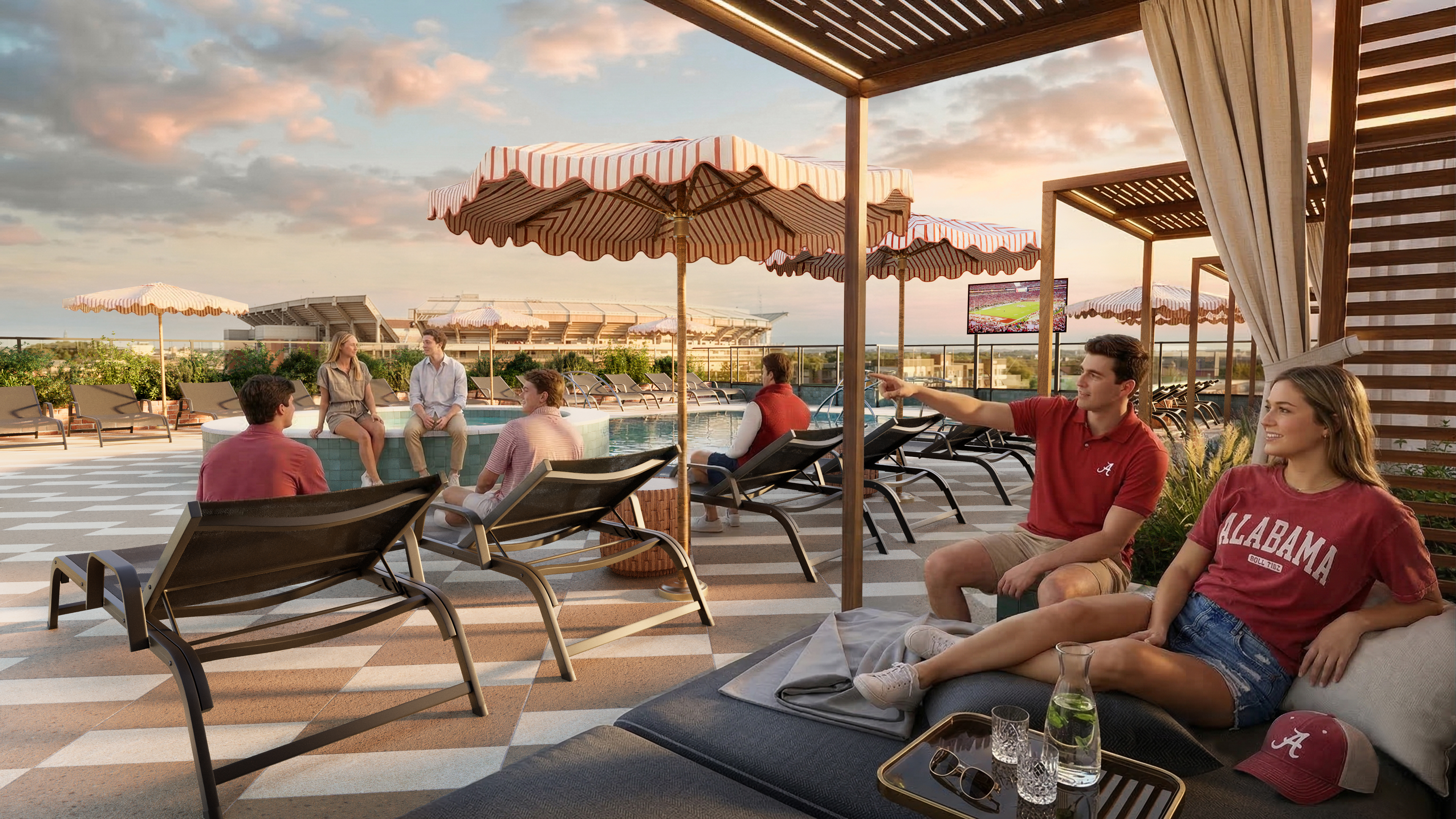
When the pitch is the experience, the pool deck, the lobby bar, the rooftop at sunset, a film carries the mood in a way a still frame cannot, especially with people and movement in the scene.
Large or complex sites
Masterplans, mixed-use districts, and campuses are hard to read in single views. An aerial flythrough explains how the pieces connect, which is often exactly what investors and municipalities need to see.
The strongest programs plan both together. The rendering package and the film share a scene, a material set, and a lighting language, so the images on your website and the film in your sales gallery look like the same building. Scoped separately, months apart, you pay for the scene twice and the two quietly drift apart.
VIHow to compare animation quotes
Two animation quotes with the same runtime can describe completely different films. When you compare, ask for the shot list, not just the length. Ask whether animated people and vehicles are included, how many animatic and edit rounds are priced, who owns the music license, and which formats ship at delivery: a 16:9 master, vertical cuts for social, and a silent loop for screens are often separate line items.
Ask about the reviewer too. High-volume shops often route your comments through a ticket queue, and overseas teams add a coordination tax of overnight feedback loops and calls at the edges of the day. Neither is dishonest, but on a film, where each review round gates days of render time, a fast and direct feedback loop is worth real money. A named lead who reviews every frame before you see it is the single best predictor of a film that arrives on time and looks like one building from start to finish.
The software matters less than the process. Most cinematic films are rendered in Corona or V-Ray; real-time walkthroughs run in Unreal Engine. What you should care about is that the studio picks the right path for your use and tells you why.
Planning a film alongside your renderings? We will scope both from one scene so they match.
Start a projectFrequently Asked Questions
How much does an architectural animation cost?
Most architectural animations cost between $5,000 and $35,000 or more. A 30-second cinematic loop sits at the low end, and a fully produced two-minute film with narration and animated people and vehicles sits at the high end. Scope, complexity, and schedule move the price more than runtime alone.
How long does an architectural animation take to produce?
A short loop typically takes two to four weeks from complete inputs. A one to two minute marketing film usually takes four to eight weeks, including a storyboard, an animatic review, test frames, and an edit round. Tight deadlines mean overtime, late nights, and weekends, which should be priced honestly.
What is the difference between a flythrough and a walkthrough?
A flythrough is an aerial or exterior camera path that establishes the site, massing, and neighborhood. A walkthrough moves at eye level through interiors and amenities, paced like a person. Most marketing films combine both.
What is an animatic and why does it matter?
An animatic is a fast, rough preview of every camera move and its timing. Changes at this stage cost hours, while the same change after final rendering can cost days of re-rendering, so careful animatic approval protects both budget and schedule.
Should I order renderings and an animation together?
Usually, yes. Both come from the same 3D scene, so planning them together avoids paying for the scene twice and keeps the images and the film consistent in materials, lighting, and design.
When is an animation worth it over more renderings?
Animation pays off for pre-leasing and pre-sales, amenity-driven projects, and large or complex sites like masterplans and mixed-use districts, where circulation, scale, and mood are hard to read from single views.
Ready to start your project?
Let's talk visualization.


