
Who Senior Living Renderings Are Really For
Residents, adult children, and investors read senior living renderings differently. How to plan image sets for each audience, and the mistakes that cost deposits.

Most senior living clients arrive with a shot list. Exterior hero, lobby, dining room, maybe the fitness studio. Reasonable images, competently briefed, and they assume the project sells itself from there on architecture. Then the images go out and lease-up moves slower than the pro forma promised, and nobody can say exactly why.
Here is what we have learned working with owners, operators, and marketing teams across North America, most of them building or repositioning communities that have to fill units well before the building opens. Developers think they are buying pictures of a building. What they are really buying is a picture of a life. A 78-year-old prospect and her daughter are not evaluating the façade. They are asking three questions, in this order: Will I have friends here? Will this feel like home or like a hospital? Will my furniture fit?
The renderings that work answer those questions. The renderings that fail are usually beautiful and completely beside the point.
IThree audiences, three image sets
The single most useful thing a senior living team can do is stop treating the rendering package as one deliverable. Investors and prospective residents should never see the same image set. They are not in the same conversation.
The investor and lender
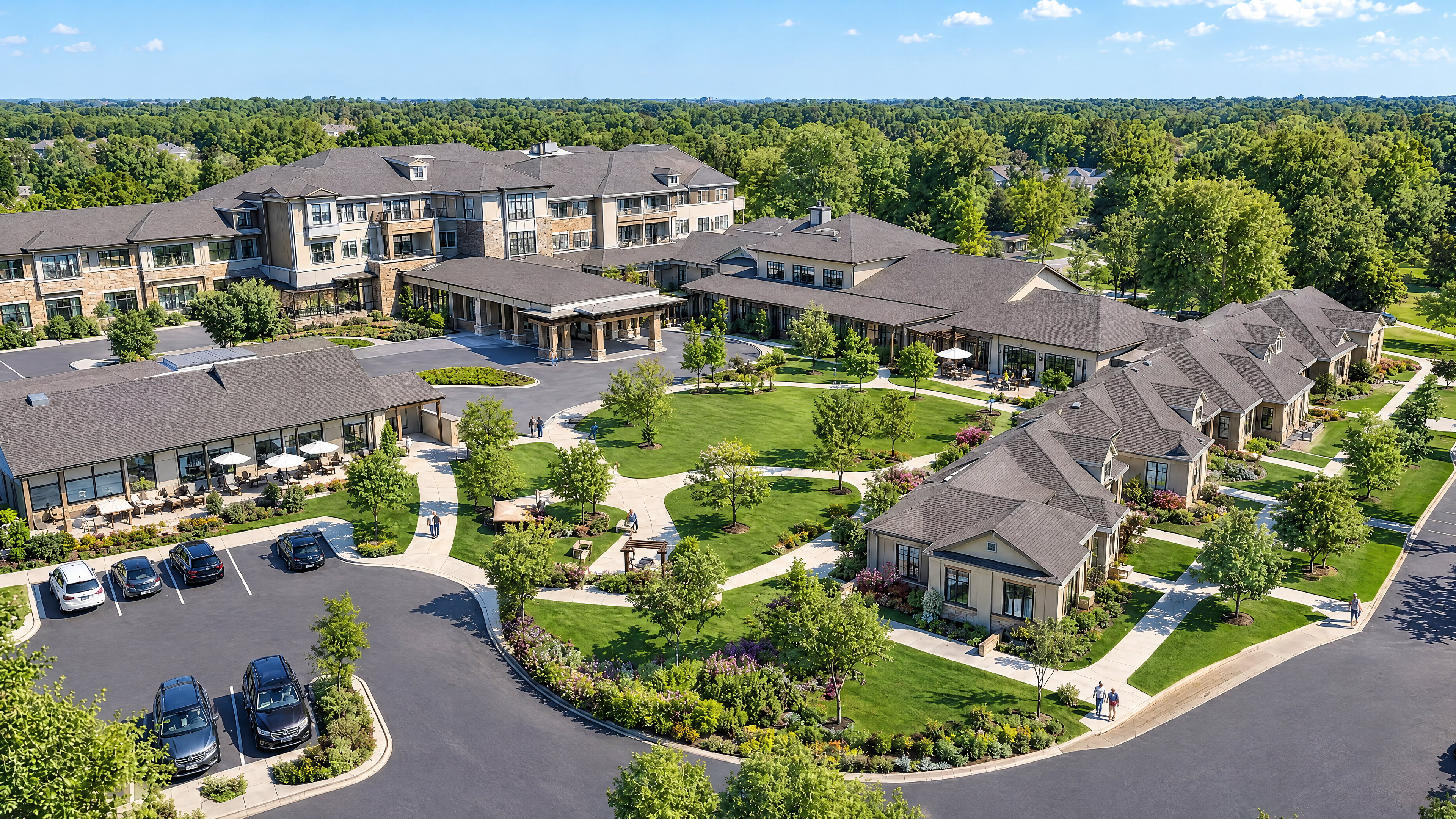
Scale, site context, polish. Capital wants to see the asset: how it sits on the parcel, how the phases relate, what the unit mix looks like at massing level. Aerials and site-context views do the work here, and they are usually the images teams already have, because they were produced for the capital stack long before anyone thought about marketing.
The adult children
They are often the ones who start the search, book the tour, and read the website at eleven at night. They are looking for evidence of safety, dignity, and staffing without being told about any of it directly. Corridors that are wide and daylit rather than clinical. Care spaces that look like rooms, not wards. Staff in the frame who look present and warm rather than staged.
The resident
She is not looking for a chair by the window. She is looking for evidence that a real life fits here. The right light at the right hour. A place for the things she already owns. Room for the small rituals that make a place feel like hers. Everything she is deciding is about whether daily life here would be better than daily life where she is now.
Your prospect is not comparing you to the community down the road. She is comparing you to staying home.
That single reframe changes the shot list more than any other note we give. Once the competitor is the house she has lived in for forty years, the clubhouse stops being the hero and the apartment becomes the argument.
IIThe apartment interior is the image that closes
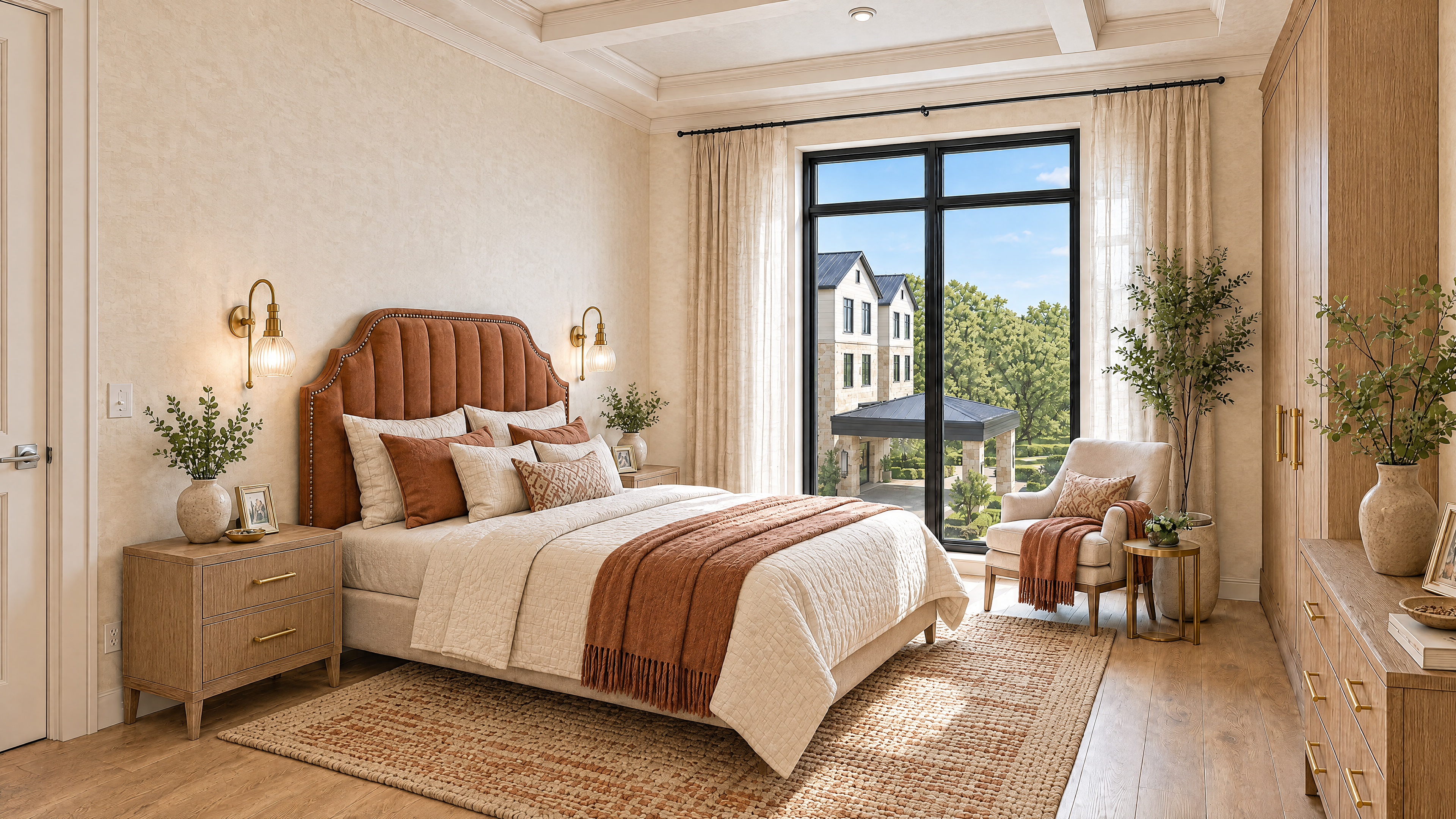
The unit interior is the most underestimated image in senior living, and it is usually the last one budgeted. It should be first, because downsizing is the scariest part of the decision. A prospect standing in a house full of thirty years of furniture is trying to picture whether any of it survives the move.
So show the unit honestly. Real-scale furniture, not the shrunken showroom pieces that make a one-bedroom read as a two. A dining table that seats the family at Thanksgiving. Personal objects, books, a half-finished puzzle, photographs. And a view out the window, because a window looking into gray nothing quietly tells the viewer the unit faces a parking deck.
IIIPeople, and the silver fitness model problem
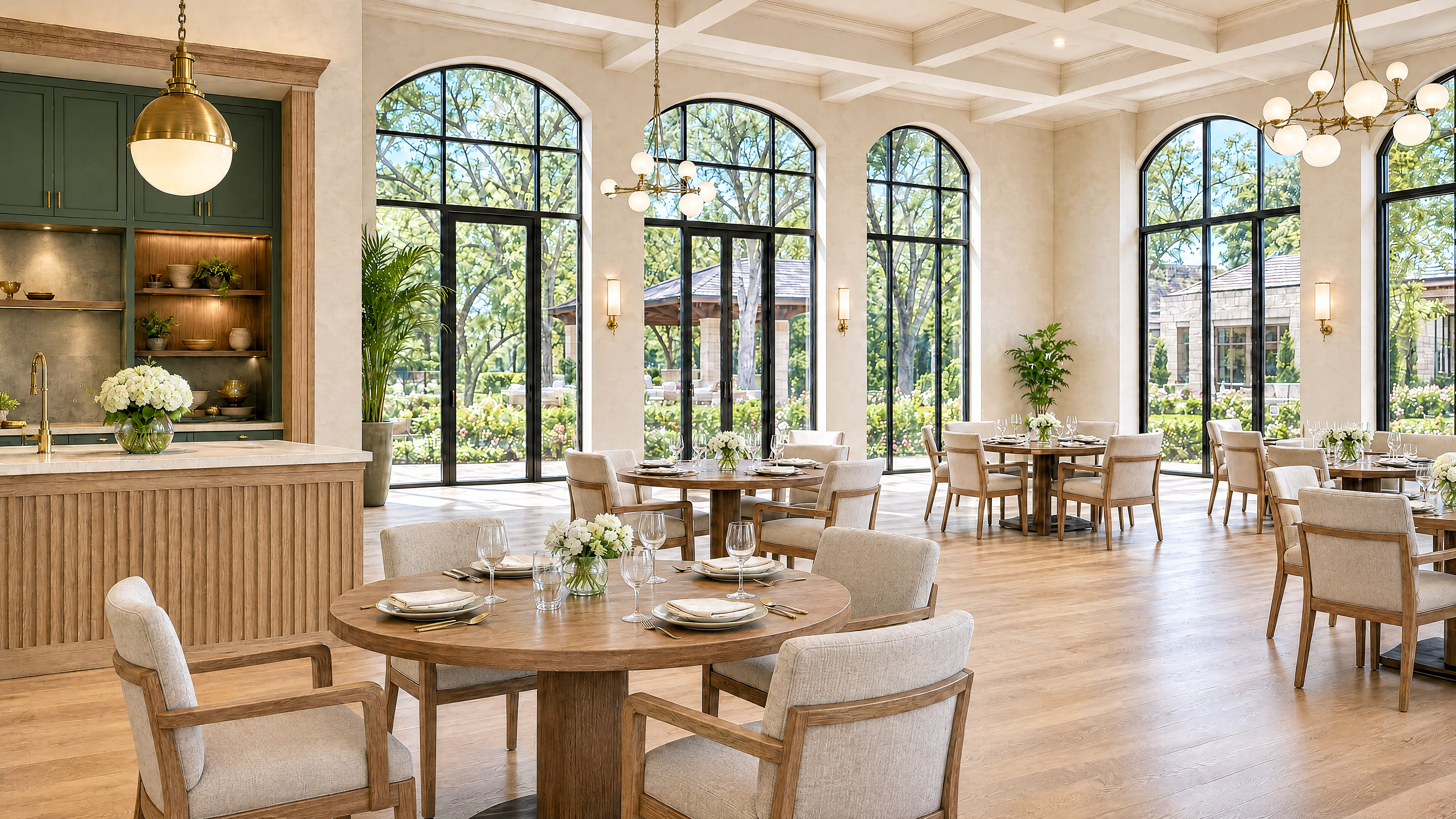
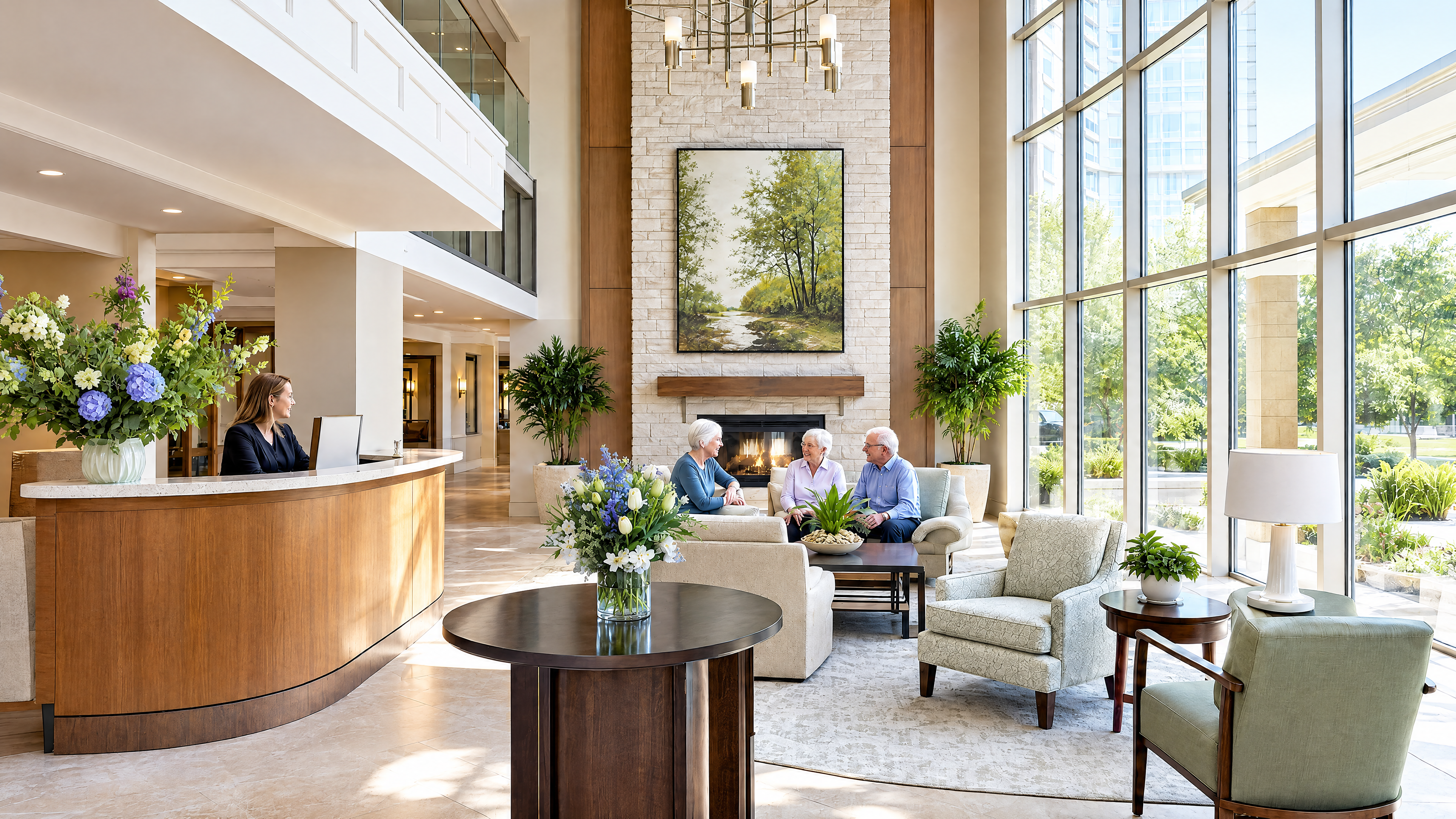
Two failure modes, and marketers pick one or the other almost every time. Either the spaces are left empty, which reads as cold and institutional no matter how good the millwork is, or they are populated with stock figures who are obviously 55-year-old fitness models with silver hair. Prospects see through the second one instantly, and it costs more credibility than an empty room does.
Seniors want to see people who look like them: active, social, dignified, and their actual age. Grandkids visiting. Staff who look like they know residents by name. Groups rather than a single figure staring out a window, because the fear underneath the whole search is loneliness.
IVTwo traps worth naming
"Resort-style" is a trap
Hospitality cues belong in senior living, and the best communities borrow from hotels on purpose. But a hotel is somewhere you visit. This is supposed to be home. When imagery leans all the way into resort language, the result is a lobby nobody would sit in alone on a Tuesday afternoon. Warmth, worn-in comfort, and evidence of routine matter more than a double-height marble moment.
Renderings that quietly erase aging
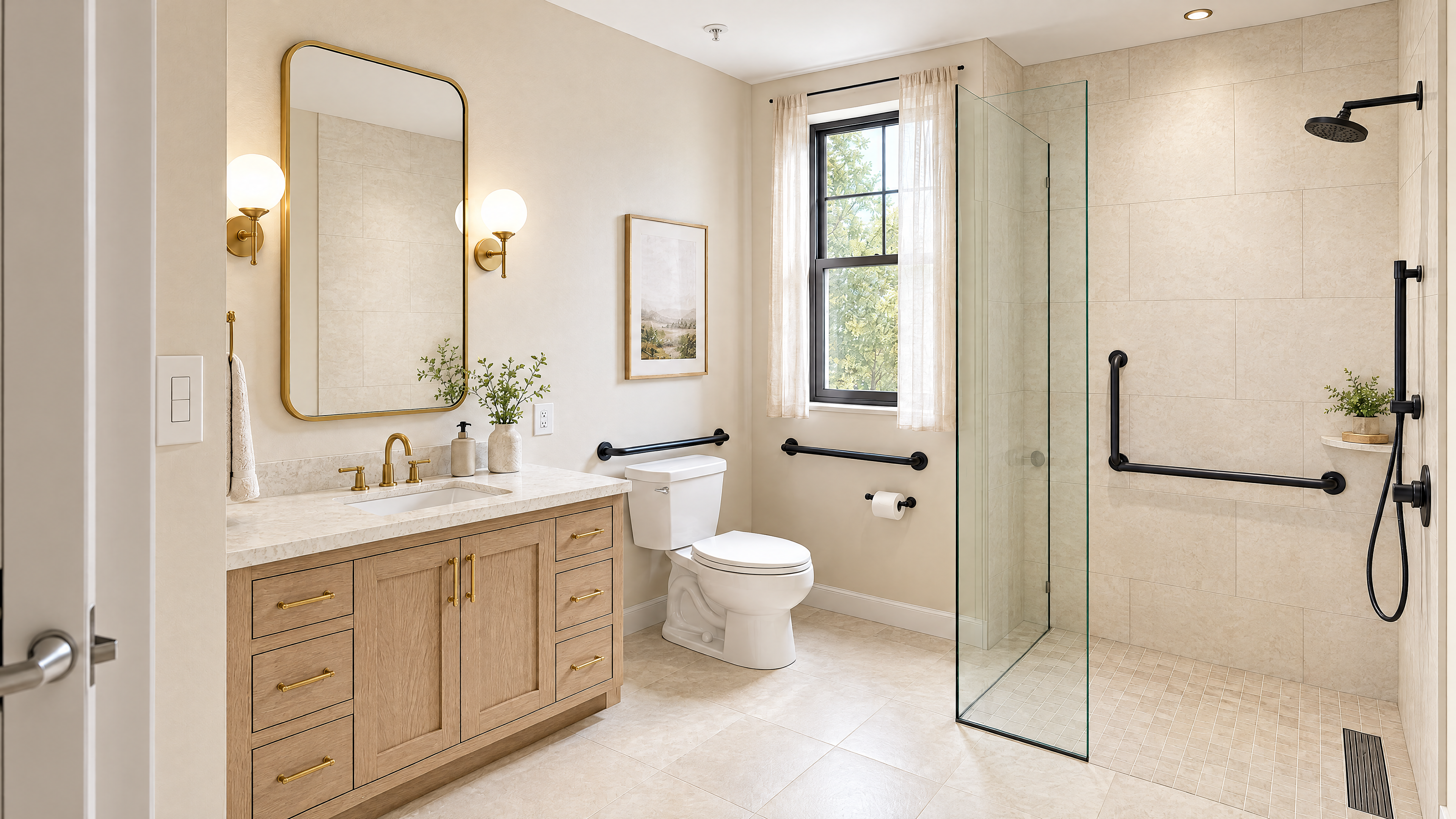
Look closely at most senior living imagery and accessibility has been airbrushed out. No grab bars, no walkers, no wheelchair turning room, as though aging were something to hide from people who are living it. Families notice. Showing a beautifully designed accessible bathroom is not a compromise, it is proof that the design team actually thought about the resident rather than the brochure.
VTiming, and why renderings show up too late
Most teams come to us after the design is locked, which is a shame, because the images could have been doing financial work for a year by then. Earlier in the schedule they support lender presentations, community meetings, and above all presales. For entrance-fee communities that need deposits in hand before financing closes, the imagery is not marketing decoration. It is the instrument that converts interest into money.
Working backward from a sales center opening, the sequence that holds up is: site and massing views for capital, then arrival and one signature shared space for early awareness, then the unit interiors and care environments for the deposit conversation, then animation and interactive tours once the sales gallery is live and staff need something to walk a family through.
VIAspiration and accuracy
There is a line in this asset class that matters more than in almost any other. If the images oversell finishes or views, you create disappointment at move-in, and senior living runs on reputation and referrals. A resident who feels the rendering lied tells her whole floor, and her daughter tells everyone at work. Honest and inspiring is the target. Fantasy is a liability with a twelve-month fuse.
In practice that means rendering the finishes in the actual specification, showing the view from the actual unit orientation, and resisting the temptation to widen a corridor or add a window that value engineering already removed. Accuracy is not the opposite of aspiration here. It is what makes the aspiration believable.
If you are planning a package for a community in design, pre-sales, or repositioning, our senior living rendering services page walks through what we typically produce and in what order. And if you would rather talk it through against your own schedule, get in touch.
Frequently Asked Questions
Who are senior living renderings actually for?
Three different audiences: investors and lenders, adult children, and the prospective resident herself. Capital wants scale, phasing, and site context. Adult children look for evidence of safety and dignity. The resident wants proof that daily life there would be better than staying home. One image set cannot serve all three conversations.
What is the most important rendering in a senior living package?
The apartment interior. Downsizing is the scariest part of the decision, and the unit image is what answers it: real-scale furniture, a dining table that seats the family, personal objects, and a genuine view out the window. It is usually the last image budgeted and the one that actually closes.
Should senior living renderings include people?
Yes, but the people have to be right. Empty rooms read as cold and institutional, while stock figures who look like fitness models with silver hair cost more credibility than an empty room does. Residents want to see people their actual age, grandkids visiting, and staff who look like they know residents by name.
Is resort-style imagery a good idea for senior living?
Hospitality cues belong in senior living, but a hotel is somewhere you visit and this is supposed to be home. Imagery that leans too far into resort language produces lobbies nobody would sit in alone on a Tuesday afternoon. Warmth, worn-in comfort, and evidence of routine matter more than a double-height marble moment.
Should renderings hide accessibility features?
No. Most senior living imagery airbrushes aging out: no grab bars, no walkers, no wheelchair turning room. Families notice. A beautifully designed accessible bathroom is proof the design team thought about the resident rather than the brochure, and families are reassured by seeing it.
When should a senior living community commission renderings?
Earlier than most teams think. Before marketing, the images support lender presentations, community meetings, and presales. For entrance-fee communities that need deposits before financing closes, the imagery is the instrument that converts interest into money, not decoration.
Why does accuracy matter more in senior living than other asset classes?
Senior living runs on reputation and referrals. If the images oversell finishes or views, the disappointment lands at move-in, and a resident who feels the rendering lied tells her whole floor. Honest and inspiring is the target; fantasy is a liability with a twelve-month fuse.
Ready to start your project?
Let's talk visualization.


